

We provide septic tank emptying and off-mains drainage maintenance for public buildings and managed estates. Where several buildings or systems share a site, we identify the installation serving the affected area before work begins.
Septic Emptying for Public Sector
Septic tank emptying and off-mains drainage maintenance for public buildings, managed estates and other public-sector premises.
HomeSeptic Emptying for Public SectorSeptic Emptying for Public Sector enquiry
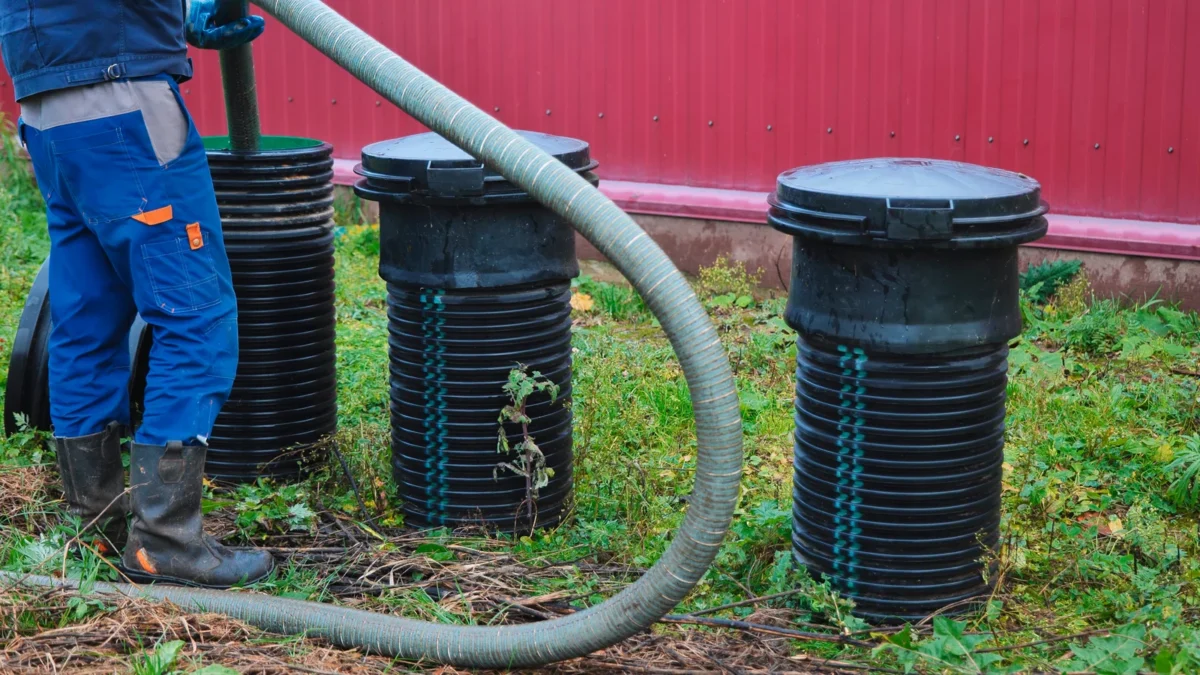
Multiple installations
Public estates can have separate tanks or treatment plants serving different buildings.
Occupied premises
Vehicle, cover and hose positions need to be managed around people using the site.
Recurring faults
A problem that returns after emptying may lie in the inlet, outlet, drainage field or treatment equipment.
Routine emptying on public premises
Routine emptying removes accumulated sludge; it does not repair a blocked pipe, failed drainage field or treatment-plant fault. On occupied premises, tanker, cover and hose positions need safe separation from staff, visitors and public access.
Waste handling and multiple systems
Where more than one tank or treatment plant is present, the collection record identifies the installation attended and any incomplete access. Collected sewage must be carried by the appropriate waste carrier to a receiving facility authorised for that waste.

Public sector septic tank enquiries
Complete the form and we will get back to you.
Waste duty of care
The waste duty of care code for England and Wales covers responsibilities for storing, transferring and handling waste. Sewage exposure and confined-space hazards require separate safety controls.
Maintenance and recurring faults
Collection intervals should reflect the installed system and actual use. High levels or backing-up that return soon after pumping need investigation of the wider drainage system.
Septic Emptying for Public Sector: common questions
Can one public site have more than one sewage system?
Yes. Different buildings may drain to separate tanks, pumping chambers or treatment plants, so the installation serving the affected area needs to be identified.
Does emptying fix repeated backing-up?
Not necessarily. Pumping removes sludge and liquid, but pipe restrictions, unwanted inflow and drainage-field faults require their own investigation.
Can a collection be carried out on an occupied public site?
It depends on safe vehicle access, the position of covers and hoses, and whether affected facilities need temporary restriction during the work.
What paperwork may be relevant after sewage collection?
The appropriate waste documentation should identify the collection and receiving destination. Other maintenance findings are separate from waste-transfer requirements.