A persistent sewage smell around a septic system can originate from the tank, connecting drains, ventilation arrangements or the drainage field. The location of the smell, when it appears and whether drainage is also affected help determine which part needs attention. An odour alone does not prove that a septic tank is full, and emptying it will not necessarily remove the cause.
The most useful first step is to establish where the odour is strongest and whether it follows a particular event, such as heavy wastewater use, rainfall or recent maintenance. Different patterns point towards different possible faults.
What does the location of the smell tell you?
Odours are produced when sewage and organic material break down. A septic system contains wastewater in various stages of treatment, but its components are intended to contain and manage that wastewater rather than allow it to escape uncontrolled.
Where the smell is noticed can help identify which component needs examining.
Smell concentrated around the septic tank
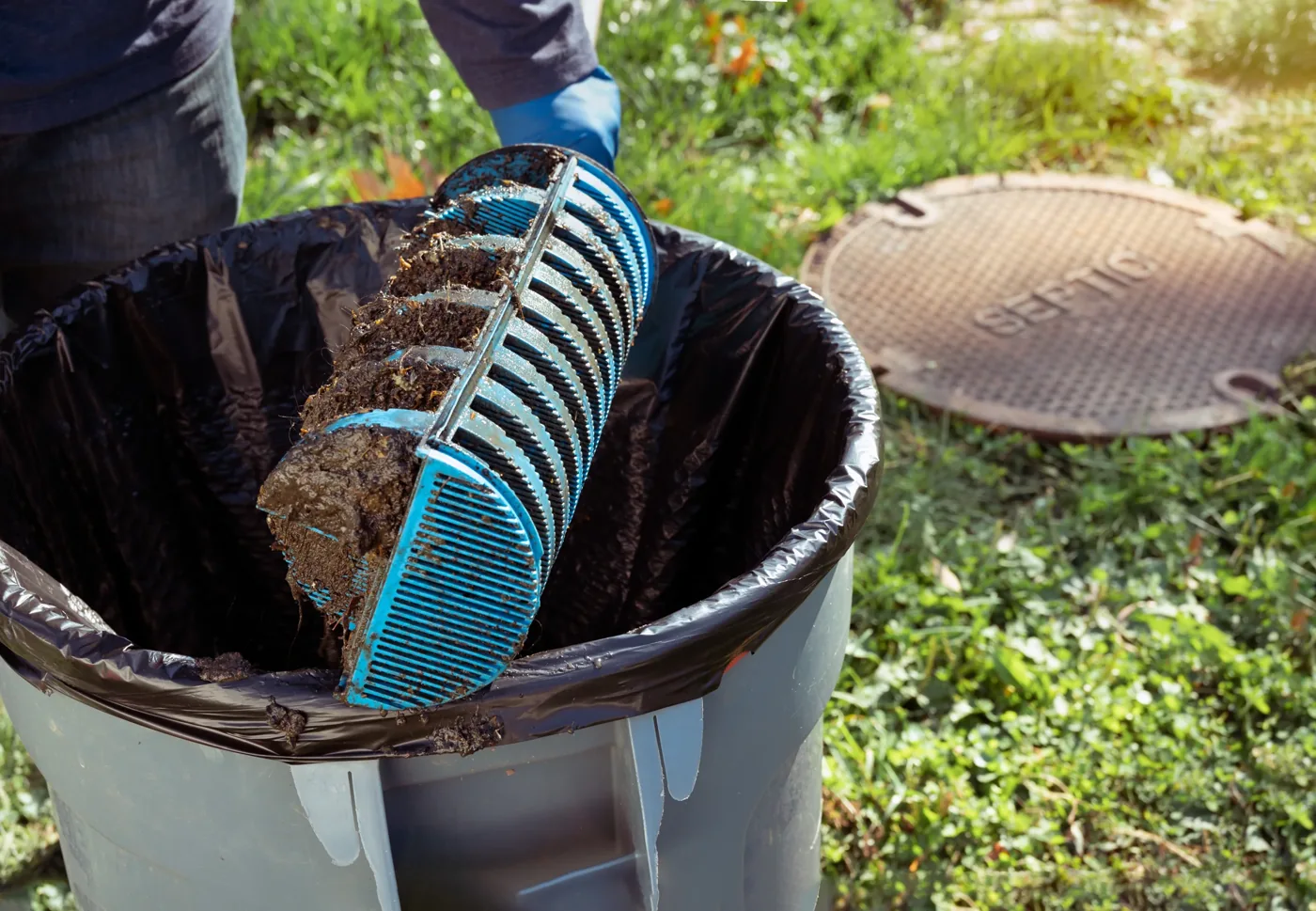
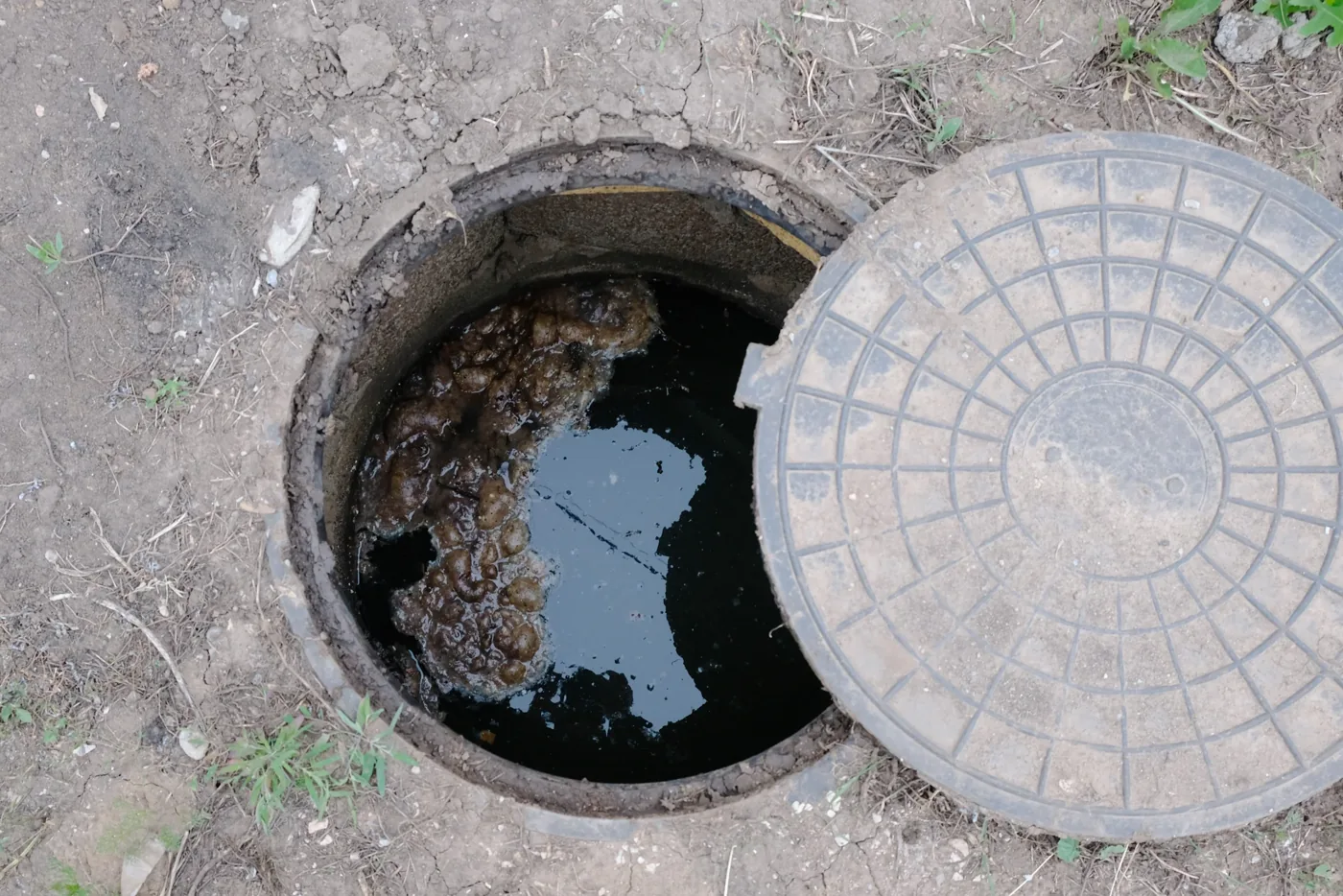
A strong odour close to the tank can indicate a problem with an access cover, seal, connection or another part of the tank structure. The location is important because gas escaping near an access point is a different problem from wastewater failing to disperse beyond the outlet.
Check whether the smell is consistently concentrated around the tank or only occurs when a cover has been opened for maintenance. A temporary odour during servicing is not equivalent to a persistent smell from a closed installation.
The Environment Agency identifies leaks, damaged pipes and sewage smells among the defects relevant to maintaining treatment systems under England’s general binding rules for discharges to ground.
Smell near the drainage field
A persistent sewage smell over the drainage field, particularly when accompanied by unusually wet ground, raises a different possibility: wastewater may not be passing through the ground as intended.
A drainage field receives effluent from the septic tank through buried distribution pipes. The surrounding ground provides further treatment. Its performance depends on the suitability of the soil, infiltration capacity and volume of incoming wastewater.
The Environment Agency’s infiltration systems guidance explains the relationship between treatment, distribution and infiltration into the ground.
If wastewater remains near the surface because the soil cannot accept the incoming flow, sewage-related odours can become noticeable. This may reflect a drainage restriction, excessive loading or unsuitable ground conditions. The smell itself cannot distinguish between those causes.
Our explanation of how septic drainage fields work helps clarify why a problem beyond the tank can become noticeable around the property.
Smell around internal drains or external pipework
An odour noticed mainly around bathrooms, kitchens or external drainage chambers may originate before wastewater reaches the septic tank.
Defective seals, faulty traps, inadequate ventilation or restricted connecting drains can produce smells without establishing that the tank itself is defective. If one fixture smells while other drains operate normally, the investigation may begin locally. If several fixtures show related problems, the shared drainage route deserves consideration.
This distinction prevents a problem in ordinary building drainage from automatically being attributed to sludge accumulation inside the tank.
Why does the smell change after rainfall or heavy water use?
The timing of an odour can help identify the conditions under which the wastewater system struggles.
- After prolonged rainfall: saturated ground or elevated groundwater may restrict effluent infiltration. A damaged connection may also allow unwanted water into the drainage system.
- During heavy household use: increased wastewater flow may expose an existing restriction or place greater demand on an already struggling drainage field.
- Immediately after maintenance: recently opened covers or disturbed deposits may temporarily release odours. A continuing smell requires a separate explanation.
- During otherwise normal conditions: a persistent odour unrelated to rainfall or occupancy may direct attention towards a local defect, ventilation arrangement or ongoing drainage problem.
These patterns are clues rather than proof. For example, an odour worsening after rain could relate to a saturated drainage field, but it could also reflect a faulty chamber connection affected by groundwater.
Can a tank smell even when it has been emptied recently?
Yes. Routine emptying removes accumulated waste but does not automatically repair defective covers, seals, ventilation, connecting pipes or drainage fields.
A septic tank also normally contains liquid while operating. Its contents are not permanently absent after an emptying visit. As wastewater enters, the tank returns towards its normal operating level and displaces effluent towards the drainage field.
If the underlying problem is a restricted outlet or saturated ground, the smell may remain or return despite appropriate sludge removal.
Likewise, where a leaking connection releases odorous gases, removing sludge does not restore the connection’s integrity.
This is why the maintenance record should identify what was actually done. A record confirming desludging is not evidence that every component of the drainage system was examined or repaired.
How should the source of a persistent odour be investigated?
A useful assessment separates evidence about the smell from evidence about how the drainage system is operating.
- Identify the strongest location. Establish whether the odour is concentrated near the tank, a drain, an inspection chamber or the drainage field.
- Record the timing. Note whether it occurs continuously, after rainfall, during heavy wastewater use or following a maintenance visit.
- Compare drainage behaviour. Establish whether fixtures drain normally, whether several parts of the property are affected and whether symptoms change together.
- Review previous work. Check when the system was last emptied, which components were examined and whether any defects were recorded.
- Match investigation to the suspected component. A possible cover defect, restricted pipe and poorly infiltrating drainage field require different types of assessment.
For systems with an environmental permit in England, the Environment Agency’s permit compliance guidance specifically identifies sewage smells and poor drainage as conditions requiring checks and corrective action.
When is septic tank emptying the right response?
Emptying is appropriate when accumulated sludge requires removal under the system’s maintenance requirements. It may be one part of resolving a problem if excessive solids have contributed to poor operation.
However, if odours originate from damaged fittings or a failing drainage field, collecting sludge alone is unlikely to provide a lasting solution.
If the smell persists, our septic tank smells service information provides further guidance and a way to enquire about the symptoms.
The aim is to identify the source before deciding on emptying, pipe investigation or repairs. The position and behaviour of the smell are more useful than assuming that every sewage odour means the tank needs pumping out.