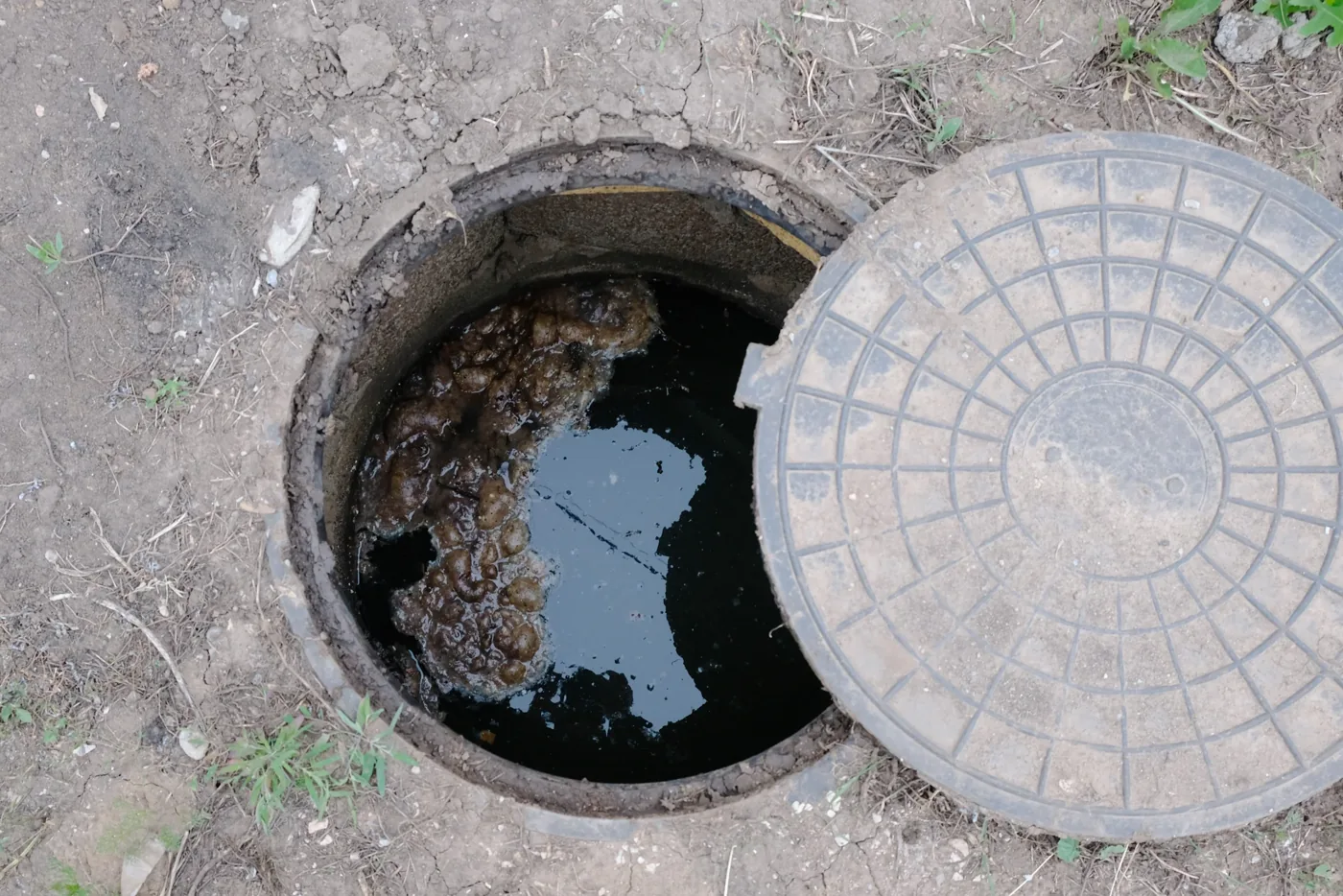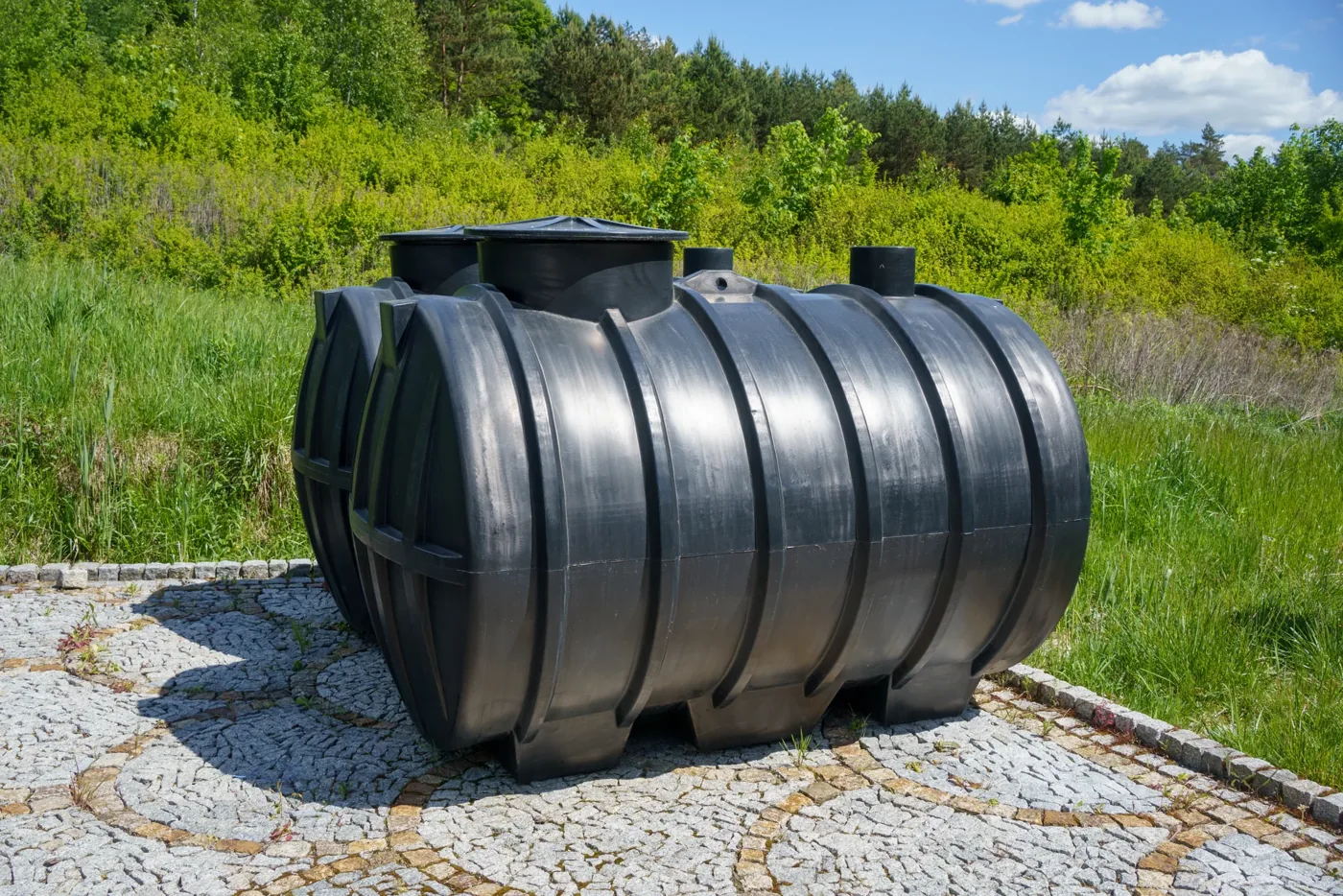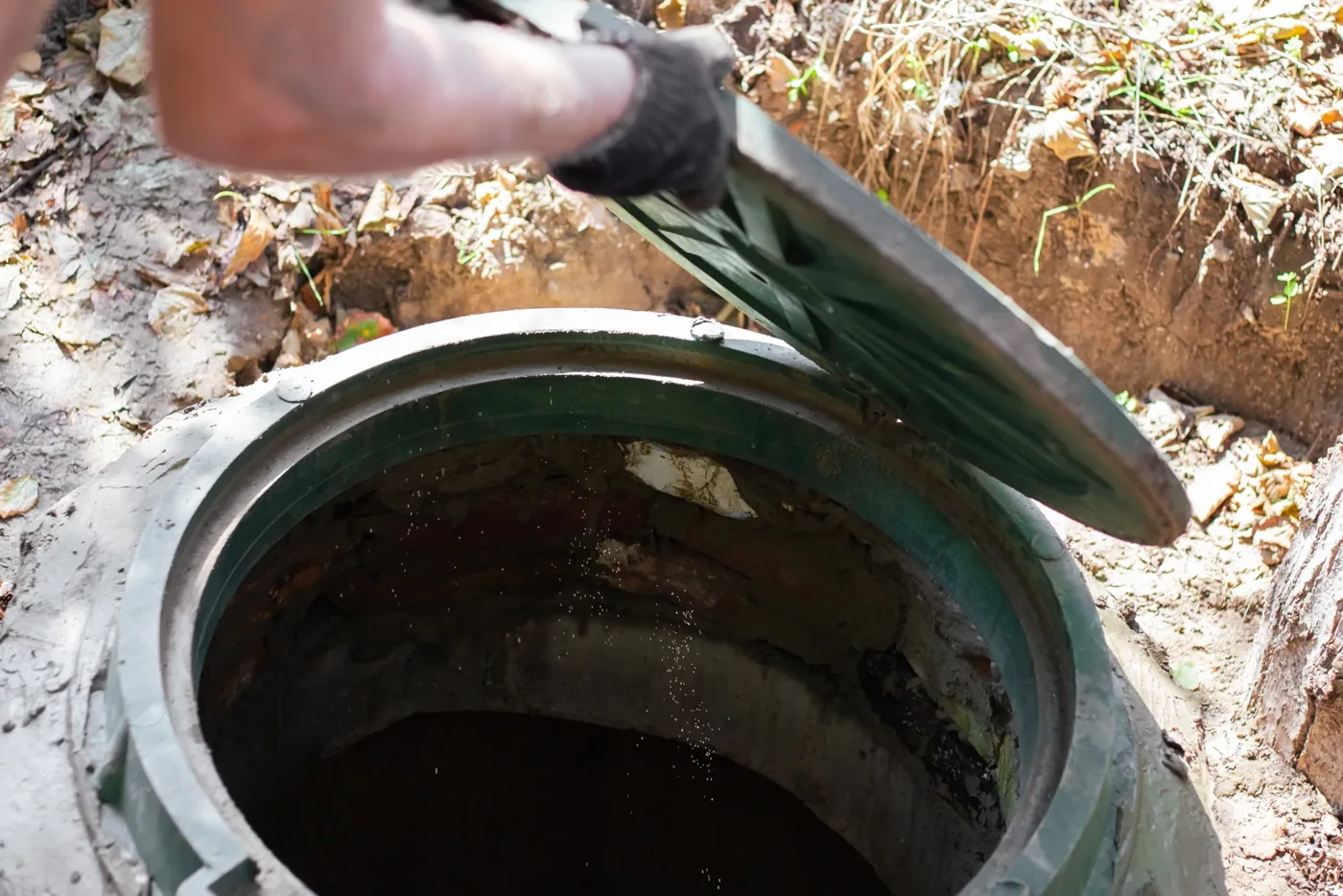
A septic tank can sometimes be emptied while its drainage field is flooded, but pumping is not automatically the appropriate response. High groundwater can prevent wastewater leaving the system and can also create pressure around the buried tank. Removing its contents without considering that pressure may damage the installation.
The decision depends on the tank’s construction, surrounding water levels, the cause of flooding and whether removing sewage would provide meaningful relief.
Why a flooded drainage field causes problems
A septic tank normally receives wastewater, retains settled solids and allows liquid to pass into a drainage field. The field then distributes effluent into suitable surrounding soil.
During prolonged rainfall or groundwater flooding, soil around the drainage field may become saturated. With little available capacity for additional liquid, effluent cannot disperse normally.
The resulting restriction can cause elevated liquid levels in the tank, slow internal drains and, in more serious cases, sewage backing up towards the property.
This situation differs from a tank that needs routine desludging because solids have accumulated over time. A recently emptied tank can still experience flooding-related problems if its discharge route cannot accept wastewater.
The drainage fields guide explains how soil conditions influence the final stage of wastewater disposal.
Groundwater pressure changes the risks of emptying
An underground tank experiences pressure from the surrounding ground and groundwater. Its contents contribute weight that helps resist upward forces.
If groundwater is high and a substantial volume of liquid is removed, the balance of forces changes. Depending on the tank’s design, installation and ground conditions, the resulting buoyancy can potentially cause movement or flotation.
The Environment Agency’s guidance on dealing with sewage during flooding specifically advises consulting a drainage contractor before emptying an on-site sewage system following a flood. It explains that, in extreme circumstances, emptying can cause an underground tank to lift.
The concern is not limited to visible standing water. Groundwater can remain elevated below the surface after floodwater has disappeared.
For that reason, a dry-looking inspection cover or lawn does not establish that conditions around the tank are suitable for complete emptying.
Temporary storage relief is different from repairing drainage
Removing liquid may create temporary storage relief where wastewater is threatening to back up into a building. Whether that is appropriate must be assessed against the tank’s stability and the amount of incoming wastewater.
Even if some capacity is created, it may disappear quickly when the property resumes normal water use. The saturated drainage field remains unable to disperse effluent effectively.
Repeated pumping during prolonged flooding can therefore become an expensive cycle without resolving the discharge restriction.
Temporary collection should not be confused with a permanent increase in capacity. A septic tank is not designed to function like a sealed cesspool that relies exclusively on regular removal of its contents.
How to decide what intervention is appropriate
A drainage contractor needs enough information to distinguish three overlapping questions:
- Surrounding conditions: Is the flooding caused by high groundwater, surface runoff or a separate drainage defect?
- Tank stability: Could removing liquid create unacceptable structural or flotation risks?
- Immediate capacity: Is there sewage backing up, and would controlled collection provide useful short-term relief?
Tank material, installation records, recent rainfall and the behaviour of surrounding inspection points may all contribute to the assessment.
Where sewage is approaching internal fixtures, emergency septic tank emptying may be considered after those conditions have been evaluated. It is not a substitute for determining whether the drainage field can function.
What happens after floodwater recedes?
Once groundwater levels fall, drainage performance may recover if saturation was the principal problem and the field remains intact. However, persistent high levels, recurring wet ground or continued backing-up suggest that further investigation is needed.
Prematurely assuming the problem has disappeared can conceal an outlet blockage or deterioration that only becomes obvious during the next period of heavy rainfall.
The appropriate outcome is a decision based on surrounding groundwater and actual system behaviour, rather than treating every high tank level as a reason to pump immediately.