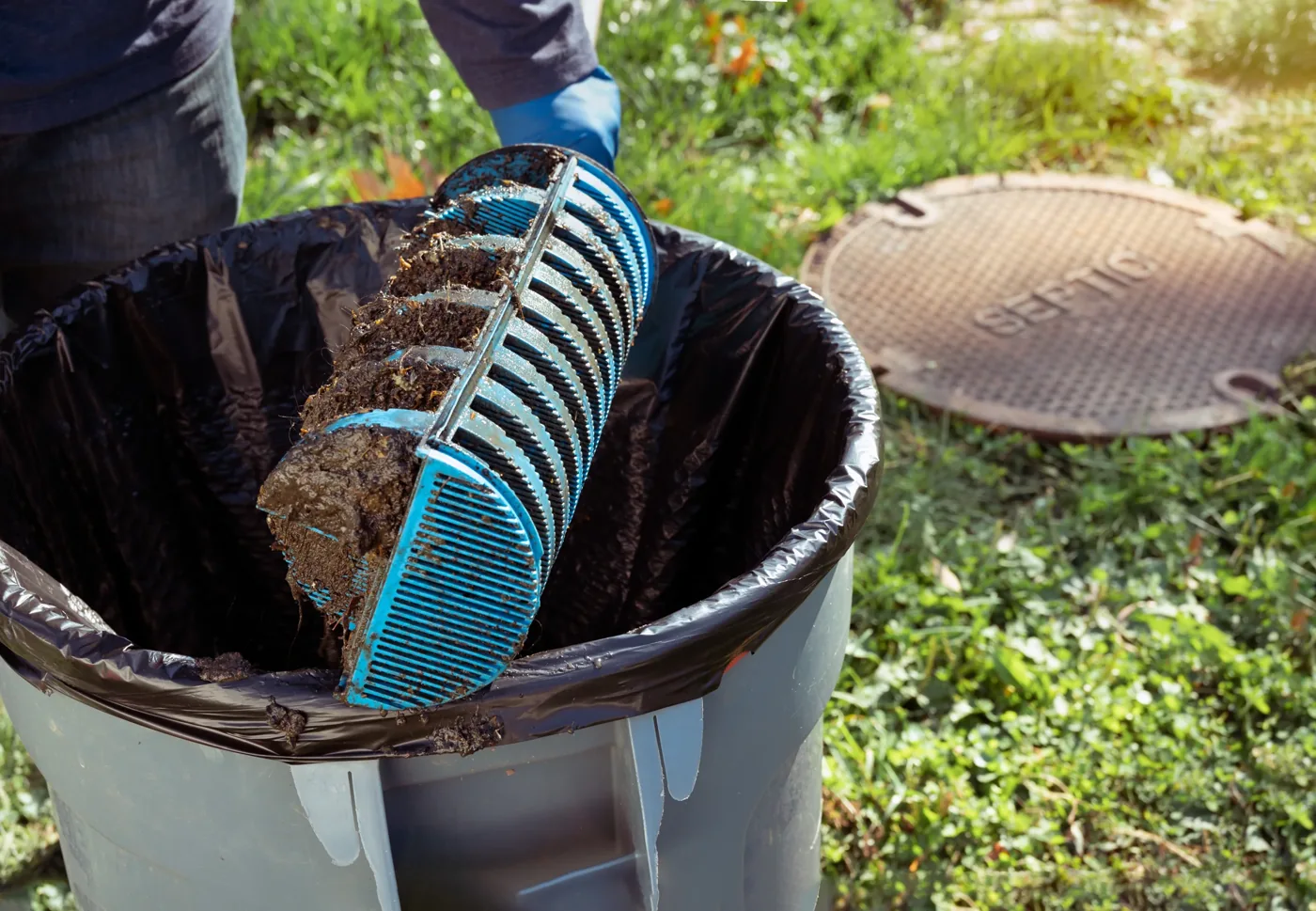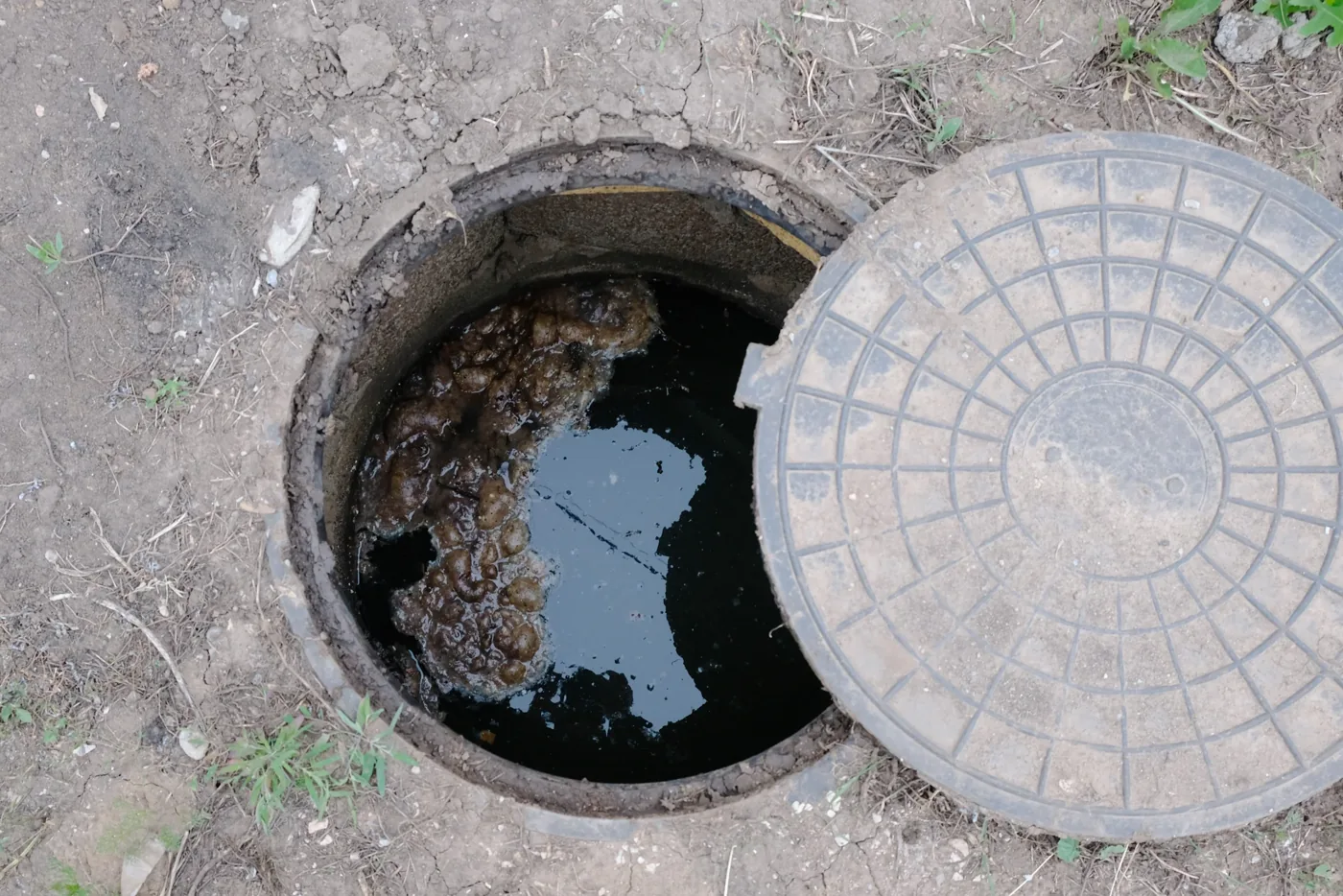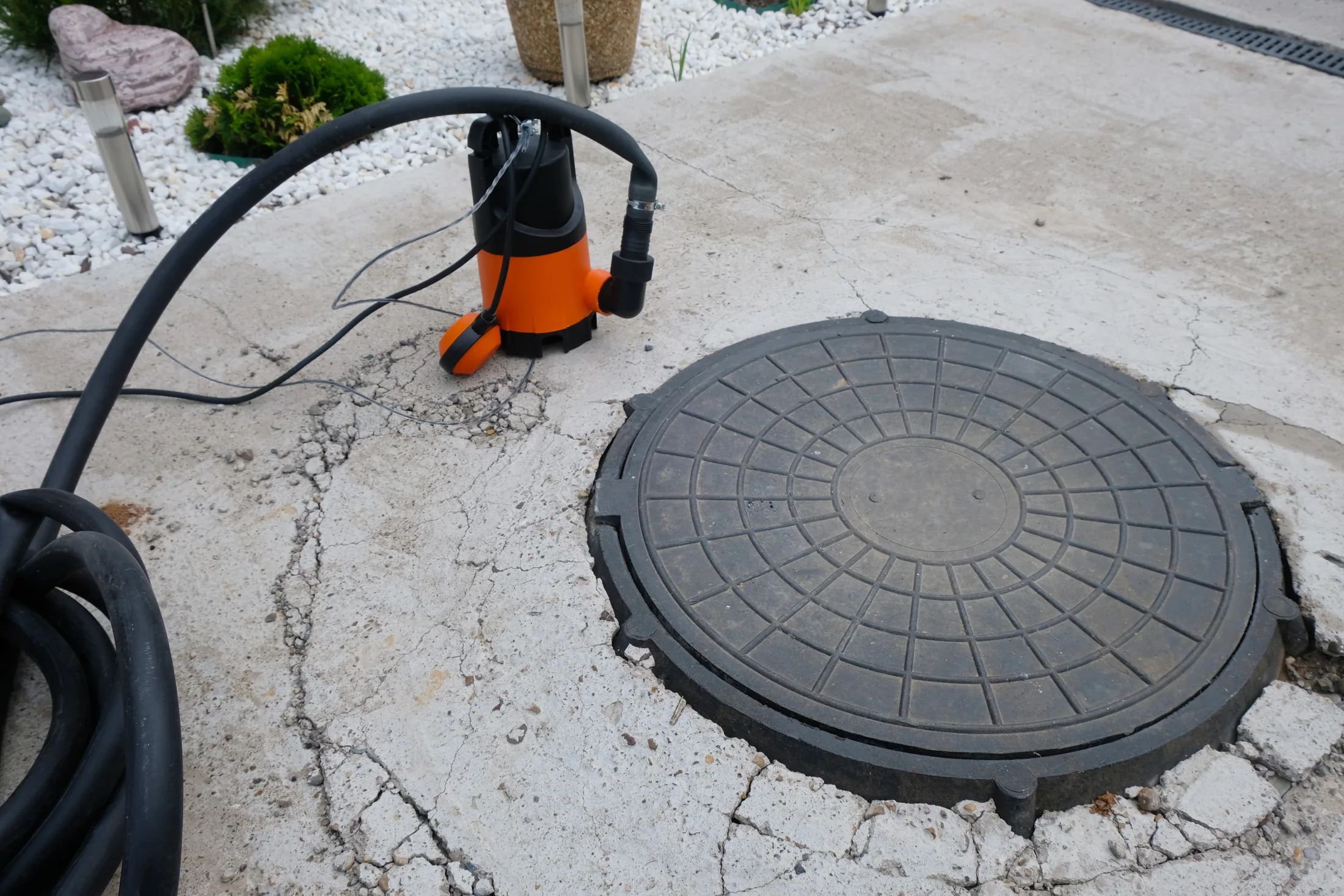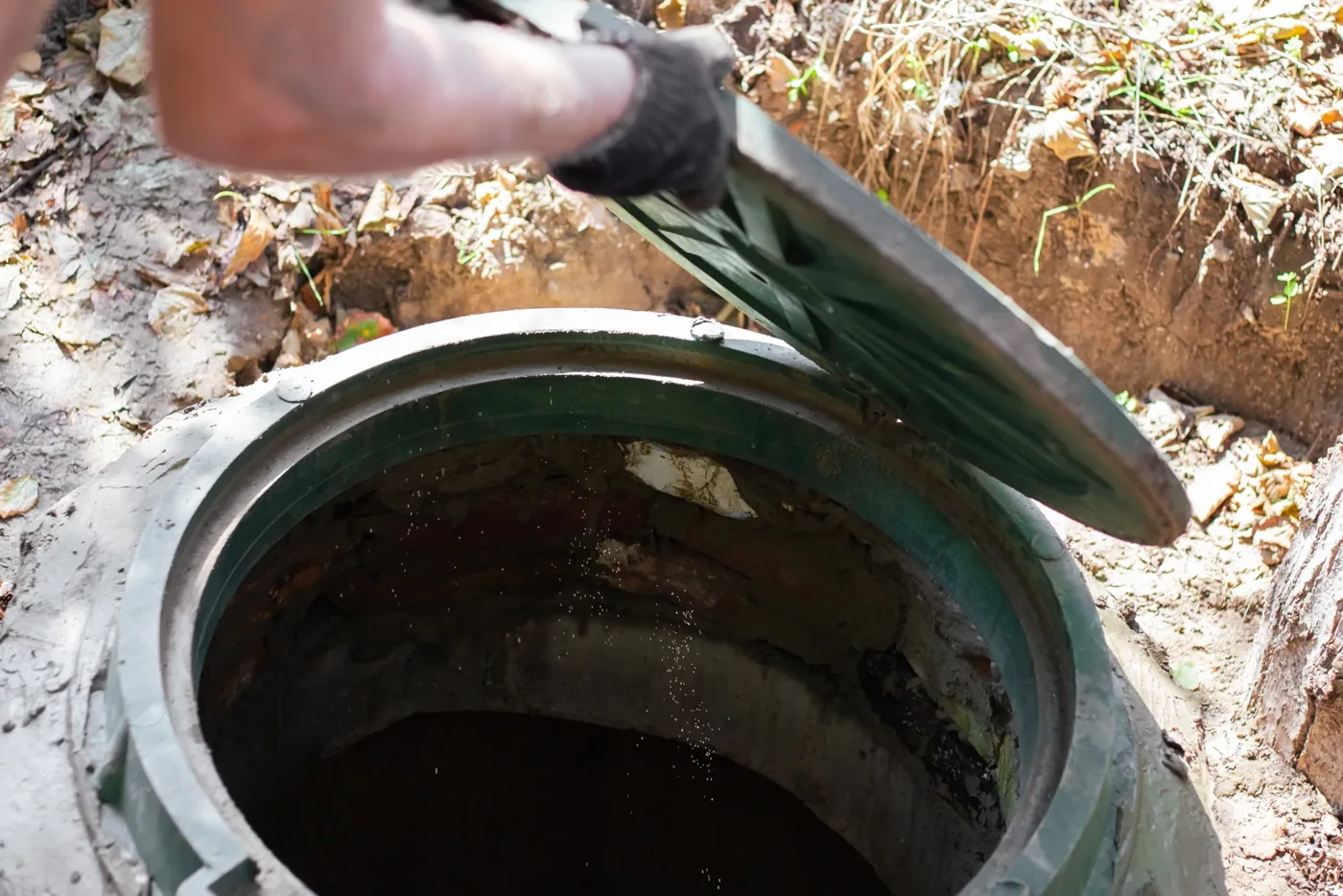
A septic tank outlet can remain blocked after desludging because removing accumulated sludge does not necessarily clear the outlet pipe, repair damaged fittings or restore drainage beyond the tank. Desludging deals primarily with stored solids. An outlet restriction is a separate problem affecting the movement of liquid from the tank towards the drainage field.
When drainage remains slow or the tank level rises again soon after emptying, the important question is where the liquid is being prevented from flowing. Further pumping alone may provide temporary relief without addressing the restriction.
Why sludge removal may leave an obstruction
A conventional septic tank separates incoming sewage into settled sludge, floating material and liquid effluent. As wastewater enters, a corresponding volume normally passes through the outlet towards the drainage field. The outlet connection and associated pipework must remain sufficiently clear for this movement to continue.
During desludging, accumulated solids are removed from the tank compartments requiring maintenance. However, deposits lodged within a connecting pipe, a restricted outlet fitting or an obstruction further along the drainage system may remain unaffected.
For example, a tank might be successfully emptied while a compacted deposit remains within the outlet connection. Once normal wastewater flows resume, the liquid level can rise because the available outlet capacity is insufficient.
Equally, a temporarily lower liquid level immediately after emptying does not establish that the original drainage fault has disappeared. The tank normally refills towards its operating level as wastewater enters.
Tank outlet versus downstream restrictions
The position of the restriction determines which intervention is appropriate. There are three main areas to distinguish:
- Tank compartment: residual deposits, displaced material or an internal obstruction may interfere with the route towards the outlet.
- Outlet connection: a restricted dip pipe, damaged fitting, accumulated solids or blocked outlet filter, where fitted, can impede discharge.
- Downstream drainage: an obstruction in buried pipework, distribution arrangements or the receiving drainage field can prevent liquid from leaving the system normally.
The Environment Agency describes septic systems as including the tank, connecting pipework and infiltration arrangements in its guidance on infiltration systems. This matters because a problem appearing at the tank may originate elsewhere in that connected system.
What can a damaged outlet fitting cause?
A septic tank outlet commonly uses a dip pipe or baffle arrangement to help retain floating material while allowing liquid to pass. Damage, displacement or blockage can interfere with this function.
A missing or damaged fitting may also allow material that should remain inside the tank to travel towards downstream drainage. The problem is therefore not always simply a narrowing that needs cleaning. The condition and position of the fitting also matter.
The guide to outlet baffles and dip pipes explains these components in more detail.
How to establish where the fault lies
The timing and behaviour of the drainage problem provide useful evidence. A restriction present immediately after desludging suggests the original obstruction may not have been removed. Drainage that improves briefly before deteriorating again can indicate that emptying temporarily created storage capacity without restoring the outlet route.
Useful information for a drainage assessment includes:
- Whether the property drains slowly throughout or only during heavier water use.
- How quickly symptoms returned after desludging.
- Whether the outlet fitting was checked during the previous visit.
- Whether inspection chambers downstream show restricted flow or abnormal water levels.
- Whether wet ground or surface pooling has appeared near the drainage field.
These observations help distinguish a localised blockage from a wider drainage problem, although they do not establish the cause without suitable inspection.
When cleaning is appropriate and when further investigation is needed
Targeted septic tank cleaning may be appropriate where deposits or an identifiable obstruction are restricting accessible tank connections. The cleaning method should be selected for the location and condition of the affected component rather than applied indiscriminately.
If an outlet pipe has collapsed, a dip pipe is damaged or downstream drainage cannot accept effluent, cleaning the tank will not correct the underlying defect. Further inspection or repair may be necessary.
Persistent high levels, backed-up drainage and wet ground should not be treated as proof that another emptying is required. In England, the Environment Agency’s maintenance rules specifically recognise blocked pipes and poor drainage as defects requiring attention.
The practical objective is to restore a clear, functioning flow path, not simply to leave the tank empty. Identifying the restriction first helps avoid repeated desludging when the real problem is an outlet component or downstream drainage.