A blocked septic drain does not automatically need water jetting, and emptying the septic tank will not necessarily remove the obstruction. The appropriate intervention depends on where the restriction is located and whether the problem involves material inside a pipe, accumulated sludge within the tank, damaged components or a drainage field that cannot accept effluent.
Water jetting is a method of clearing suitable pipework using pressurised water. Septic tank emptying is a waste-removal operation. Although both may be considered when wastewater backs up, they perform different functions and should not be treated as interchangeable.
What does water jetting actually achieve?
Drain jetting uses water delivered through specialist equipment to dislodge and move material restricting the internal passage of a drain or pipe. Its usefulness depends on the obstruction, pipe condition, layout and accessible entry points.
For example, a build-up of deposits within an otherwise serviceable drain may respond to targeted cleaning. Removing that material can restore the pipe’s available cross-section and allow wastewater to move more freely.
However, pressurised water does not repair a collapsed pipe, replace a displaced fitting or improve the infiltration capacity of saturated soil. Those faults require a different decision.
The fundamental question is whether there is an obstruction that suitable cleaning can remove, rather than a structural or downstream failure.
How is jetting different from septic tank emptying?
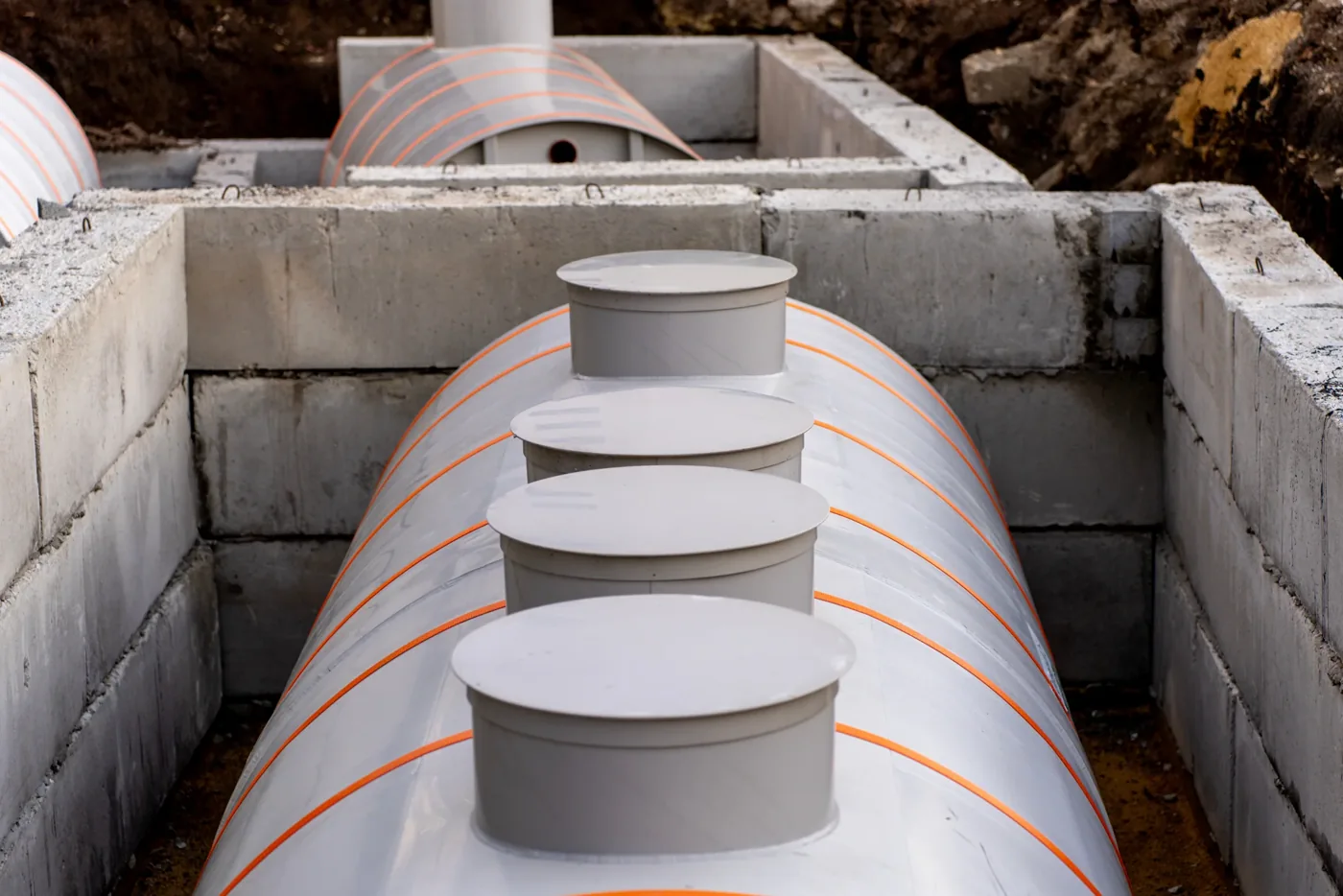
A conventional septic tank receives sewage and allows solids to settle. The liquid then passes through an outlet towards a drainage field, where further treatment takes place in the ground.
During emptying, accumulated sludge and other removable tank contents are collected for appropriate disposal. During jetting, the objective is to clear a particular section of pipework.
These functions can be compared against the observed fault.
| Observed condition | What the intervention addresses |
|---|---|
| Excessive accumulated sludge inside the tank | Desludging removes retained solids and restores the intended operating capacity for separation. |
| Removable obstruction inside suitable connecting pipework | Targeted jetting or another appropriate cleaning method may restore flow. |
| Damaged, displaced or collapsed pipe | Structural assessment and repair are required; cleaning cannot restore missing or damaged pipe structure. |
| Restricted drainage field or saturated ground | Investigation of infiltration and ground conditions is needed; neither routine emptying nor ordinary drain jetting restores soil capacity. |
England’s general binding rules for sewage discharges to ground distinguish the requirement to remove accumulated sludge from the requirement to repair treatment systems that are not in good working order. Blocked pipes and poor drainage are explicitly identified among relevant defects.
Where should a suspected blockage be located first?
The septic system is a connected arrangement rather than a single tank. Sewage travels through the property’s drainage pipes, enters the tank, passes through internal components and eventually reaches the downstream discharge system.
A restriction in any of these locations may cause slow drainage or backing-up. Its position determines whether jetting is a plausible remedy.
Inlet and upstream drainage pipes
If wastewater cannot reach the tank normally, the obstruction may lie in the connecting drains or inlet arrangement. Several fixtures affected together can suggest a restriction in shared pipework, while a single slow fixture may indicate a more local drainage problem.
Where suitable access exists, a drainage assessment may identify material that can be cleared through a targeted method. The pipe’s construction and condition remain important when selecting that method.
Tank outlet and connecting pipework
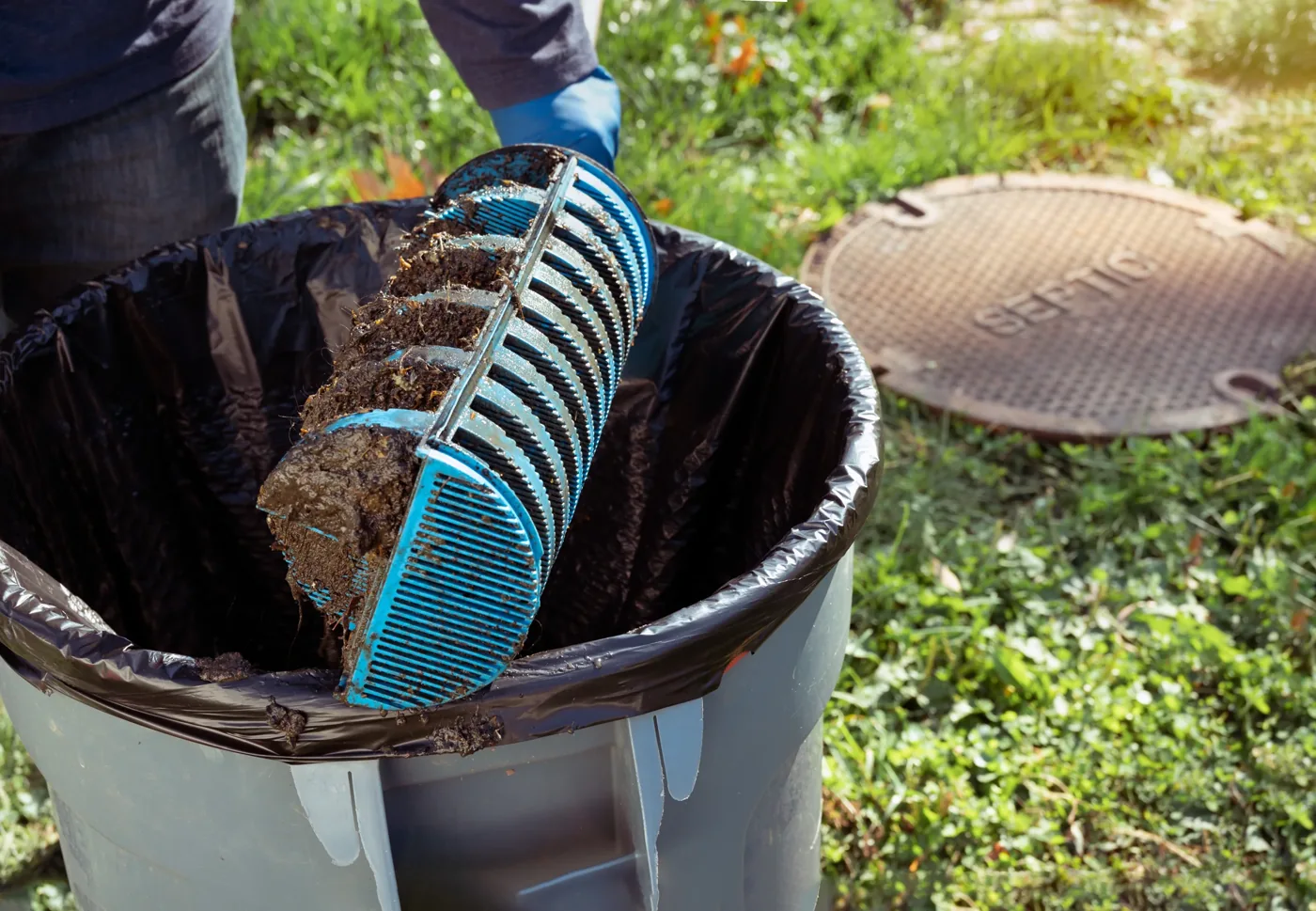
After settling within the tank, liquid should be able to pass through the outlet arrangement towards the drainage field. Some tanks have outlet baffles, dip pipes or filters that help retain solids.
A restricted outlet pipe may require cleaning, but a damaged baffle or incorrectly positioned component cannot be repaired simply by forcing water through the connection.
Our reference on septic tank outlet baffles and dip pipes explains why the condition of these components matters independently of ordinary sludge removal.
Distribution pipes and the drainage field
After the tank, effluent enters a drainage field through buried distribution arrangements. The surrounding soil must then accept and further treat the liquid.
A localised pipe restriction is different from a drainage field whose soil cannot infiltrate the incoming wastewater. Cleaning a pipe does not change the surrounding ground’s permeability or lower groundwater levels.
The Environment Agency’s infiltration systems guidance explains that drainage field suitability depends on the rate of discharge, soil properties and available infiltration area.
Accordingly, a slow-draining system should not be assumed to require jetting merely because the problem appears beyond the tank.
When is jetting unlikely to be the answer?
Several situations warrant further investigation before a pipe-cleaning method is selected.
- Symptoms return soon after clearing: there may be recurring deposits, structural damage, an outlet defect or a downstream restriction.
- Drainage deteriorates in prolonged wet weather: groundwater and infiltration conditions may be more relevant than a removable pipe obstruction.
- The pipe is cracked or displaced: restoring flow temporarily does not repair its structure.
- A tank filter repeatedly becomes restricted: the filter’s condition, retained solids and system loading need consideration rather than automatically bypassing it.
- Several downstream components remain affected: the problem may extend beyond the length of pipe proposed for cleaning.
These distinctions also influence whether a drainage contractor needs to inspect the pipe before recommending the cleaning method.
What information helps decide whether jetting is appropriate?
Before requesting work, describe what is happening rather than prescribing a particular technique.
- Identify which toilets, sinks or drains are slow or backing up.
- Record when the problem began and whether it follows heavy use or rainfall.
- Establish whether the tank has recently been emptied and whether the symptoms changed afterwards.
- Identify any known inspection chambers, outlet filters or earlier pipe repairs from maintenance records.
- Ask what evidence identifies the restriction and how the proposed intervention will address that precise location.
A useful work record should distinguish between a blockage that was cleared, a component that was found damaged and a downstream problem that remains unresolved.
How should the final service decision be made?
If the evidence indicates a removable obstruction in suitable pipework, targeted jetting may be an appropriate option. If the tank contains excessive accumulated sludge, desludging addresses that separate maintenance need. If the pipe is structurally defective or the ground cannot accept effluent, investigation or repair must address the actual failure.
For work involving suspected pipe restrictions around a septic installation, our septic tank jetting information explains when jetting may be suitable and how to enquire about the work.
The essential distinction is between restoring flow through a pipe and restoring the performance of the whole septic system. Selecting the intervention by the location and nature of the fault helps avoid repeated cleaning when the restriction is not something jetting can resolve.