Septic Tank Emptying Northern Ireland

Septic tank, cesspool and treatment plant emptying in Northern Ireland for homes, farms and businesses. Private collections for routine desludging, full cesspools and sites with difficult access.

HomeSeptic Tank Emptying Northern Ireland

Septic Tank Emptying Northern Ireland enquiry

Septic tank emptying across Northern Ireland

We empty septic tanks, cesspools and package treatment plants for homes, farms and commercial premises across Northern Ireland that are not connected to the public sewer. Regular emptying removes accumulated sludge and helps keep the system working as intended. The amount removed depends on the type of tank and its operating requirements. Our septic tank desludging page explains the work in more detail.

A septic tank separates solids from wastewater, allowing liquid to pass through its outlet. A cesspool is different: it stores wastewater without an outlet and needs emptying as it fills. Package treatment plants also accumulate sludge, but emptying must take account of the particular plant and its manufacturer’s instructions.

Detached red brick house with a lawn and fields behind it

Private septic tank emptying

Emptying for domestic, farm and commercial systems, including collections outside NI Water's standard domestic service conditions.

Septic tanks, cesspools and treatment plants

Sludge removal and wastewater collections appropriate to the type of system and its contents.

Difficult access

Narrow lanes, long distances to the tank, ground conditions and heavy covers are important when assessing a collection.

NI Water’s desludging service

In Northern Ireland, NI Water offers a discretionary desludging service for septic tanks, treatment plants and cesspools receiving domestic waste. Eligible domestic customers can request one free desludge in any twelve month period, provided NI Water’s service conditions are met. A second desludge within that period is charged, and NI Water also charges non-domestic customers.

Requests can be made through NI Water’s self service portal, by calling Waterline or by email. The conditions and request details are available from NI Water’s septic tank emptying guidance.

NI Water does not completely empty septic tanks and treatment plants where sludge needs to remain for biological treatment. The householder is responsible for maintaining the tank and connecting pipework. NI Water does not clear blockages in connecting pipes or repair tanks and lids. Further information is available from nidirect’s septic tank guidance.

Private emptying and difficult access

Private septic tank emptying may be needed when a property does not meet NI Water’s standard service conditions, when a cesspool needs more frequent collections or when the work involves non-domestic waste. Access is particularly important on rural properties with long lanes, narrow gateways or tanks some distance from a suitable parking area.

NI Water’s published conditions for standard desludging include:

  • Vehicle access at least 3.5 metres wide, with a gradient no steeper than 1 in 15.
  • An all-weather standing area capable of supporting an 18 tonne tanker within 30 metres of the tank, no more than 1.2 metres above the tank cover.
  • Covers that one person can remove safely and an unobstructed working area.
  • Written consent where access involves crossing another person’s land.
  • Domestic sewage only, with electrical supplies isolated before desludging where applicable.

These are NI Water’s conditions rather than a specification for every private tanker. For a private collection, the relevant details are the tank location, vehicle access, ground conditions, covers and the contents to be removed. A narrow lane or long distance to the tank needs assessing against the collection equipment available.

Farm septic tanks and commercial premises

Farmhouses, workshops, offices and other premises can have private sewage systems that require emptying. Some farm systems receive domestic wastewater only, while others may have separate drainage arrangements for agricultural activities. The contents need identifying before collection, particularly where there may be slurry, yard water or other non-domestic waste. Our farm septic tank emptying page covers these differences.

Commercial treatment plants may also have specific servicing and desludging requirements. Emptying removes accumulated waste, but it is not the same as repairing a damaged tank, clearing a blocked drain or servicing the mechanical components of a treatment plant.

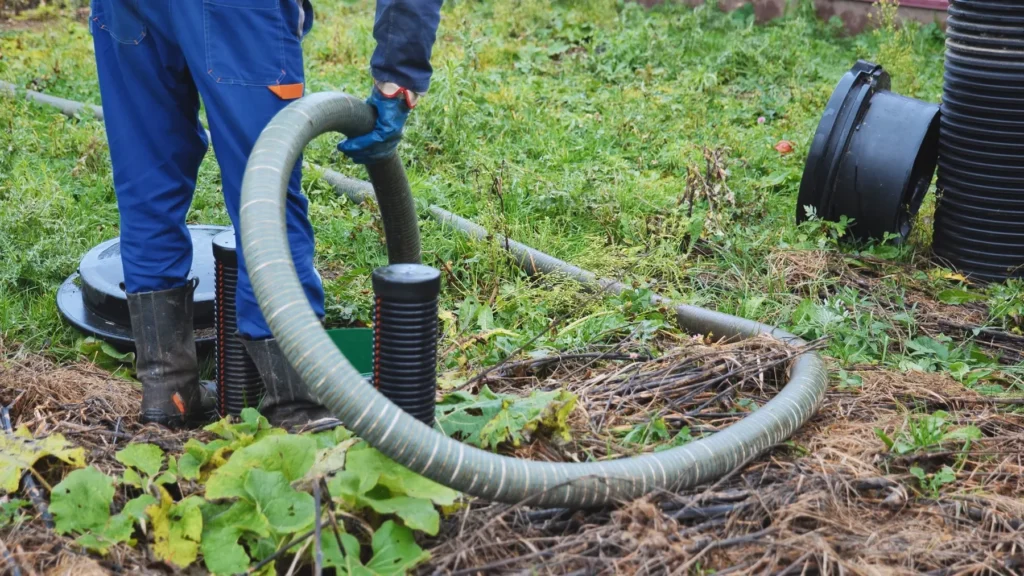
Worker in boots holding a flexible suction hose over a tank access riser in grass

Septic tank emptying in Northern Ireland

Tell us about the property, the tank and the access, and we will get back to you.

Smells, slow drains and overflowing tanks

Bad smells, slow drainage, wet ground around the soakaway or wastewater backing up can indicate that a septic system needs attention. A tank may contain excess sludge, but similar symptoms can arise from blocked pipework, a damaged outlet or problems with the soakaway.

Emptying can remove accumulated waste, although it will not necessarily resolve a drainage fault. Our septic tank problems page explains common symptoms and possible causes.

Discharge consent in Northern Ireland

Under the Water (Northern Ireland) Order 1999, discharging sewage effluent to a waterway or underground water requires consent from the Department of Agriculture, Environment and Rural Affairs (DAERA). This includes domestic and commercial premises that are not connected to the public sewer. The Northern Ireland Environment Agency (NIEA) administers the consent process.

Single dwelling domestic consents are considered subject to recommendations from the local council’s Environmental Health (Rivers) officer. Systems serving two or more dwellings and commercial activities fall within the private sewage infrastructure consent category. England’s general binding rules do not apply in Northern Ireland. Applications, ownership transfers and the Domestic Consent Public Register are covered in DAERA’s discharge consent guidance.

The owner or occupier is responsible for keeping the system in good working order, arranging regular desludging and having the necessary consent. Where several properties share a system, responsibility is shared by the owners, even if the tank is situated on only one property’s land.

Finding a septic tank on a rural property

On older properties, the tank position may not be obvious. Tanks are commonly found downslope from the building, following the direction of the main foul drain. NIEA guidance states that tanks should be at least 7 metres from the property, although older installations can be much closer.

Access may be through a metal lid, a large plastic cover, a railway sleeper lid or a structure associated with a powered treatment plant. Nettles or unusually green vegetation can sometimes indicate where a tank or soakaway is situated.

The NIEA private sewage treatment system leaflet explains how to identify and maintain these systems, including the signs of poor drainage and the importance of regular desludging.

For other UK locations, see our areas we cover, including Cumbria and Cornwall.

Septic Tank Emptying Northern Ireland: common questions

How do I get my septic tank emptied in Northern Ireland?

Domestic owners can request NI Water's free desludging service through its self service portal, Waterline or email, provided the service conditions are met. Private septic tank emptying is another option for domestic, farm and commercial properties, including those with difficult access or collections outside NI Water's standard service.

How often should a septic tank be emptied?

NIEA advises regular desludging. The interval depends on the tank size, household usage and the system's requirements. NI Water offers eligible domestic customers one free desludge in any twelve month period, but that does not determine how often every tank needs attention.

What are the regulations for septic tanks in Northern Ireland?

Septic tanks and treatment plants discharging sewage effluent to a waterway or underground water require consent from DAERA, administered by NIEA, under the Water (Northern Ireland) Order 1999. Owners or occupiers are responsible for maintaining their systems, arranging regular desludging and preventing pollution. England's general binding rules do not apply.

Will my tank be completely empty after a visit?

That depends on the system. A cesspool stores wastewater and needs its contents removed when full. Septic tanks and package treatment plants have different operating requirements. NI Water's guidance explains that some sludge is retained in septic tanks and treatment plants to support their biological operation. The manufacturer's instructions are relevant to how a particular system is desludged.

Can a septic tank be emptied if NI Water cannot reach it?

A private collection may be possible, depending on the available vehicle access, distance to the tank, ground conditions and covers. Provide these details when enquiring so the access requirements can be assessed.

Septic Emptying

Services

Request a quote

Menu

Get a quote