A septic tank should be assessed before a house extension if the building work could increase wastewater demand, affect underground drainage or change the existing discharge arrangements. An extension does not automatically require a new tank, but an installation that served the original house adequately may not be suitable for the proposed use.
The most useful approach is to establish what already exists before finalising plans that could increase occupancy or restrict access to buried components.
Which extensions change wastewater demand?
Not every extension increases sewage production. A larger living room occupied by the same household may have little effect on normal wastewater demand, while additional bedrooms or a self-contained annex could increase the number of people using the system.
New bathrooms, utility rooms and kitchens also deserve consideration, although the presence of extra fittings does not by itself establish the likely increase in daily wastewater volume.
What matters is the building’s intended occupancy and use, together with the capacity of its existing private drainage system.
Additional wastewater load can affect the time available for solids to settle and the amount of effluent the drainage field must accept.
Check the tank and drainage location before designing foundations
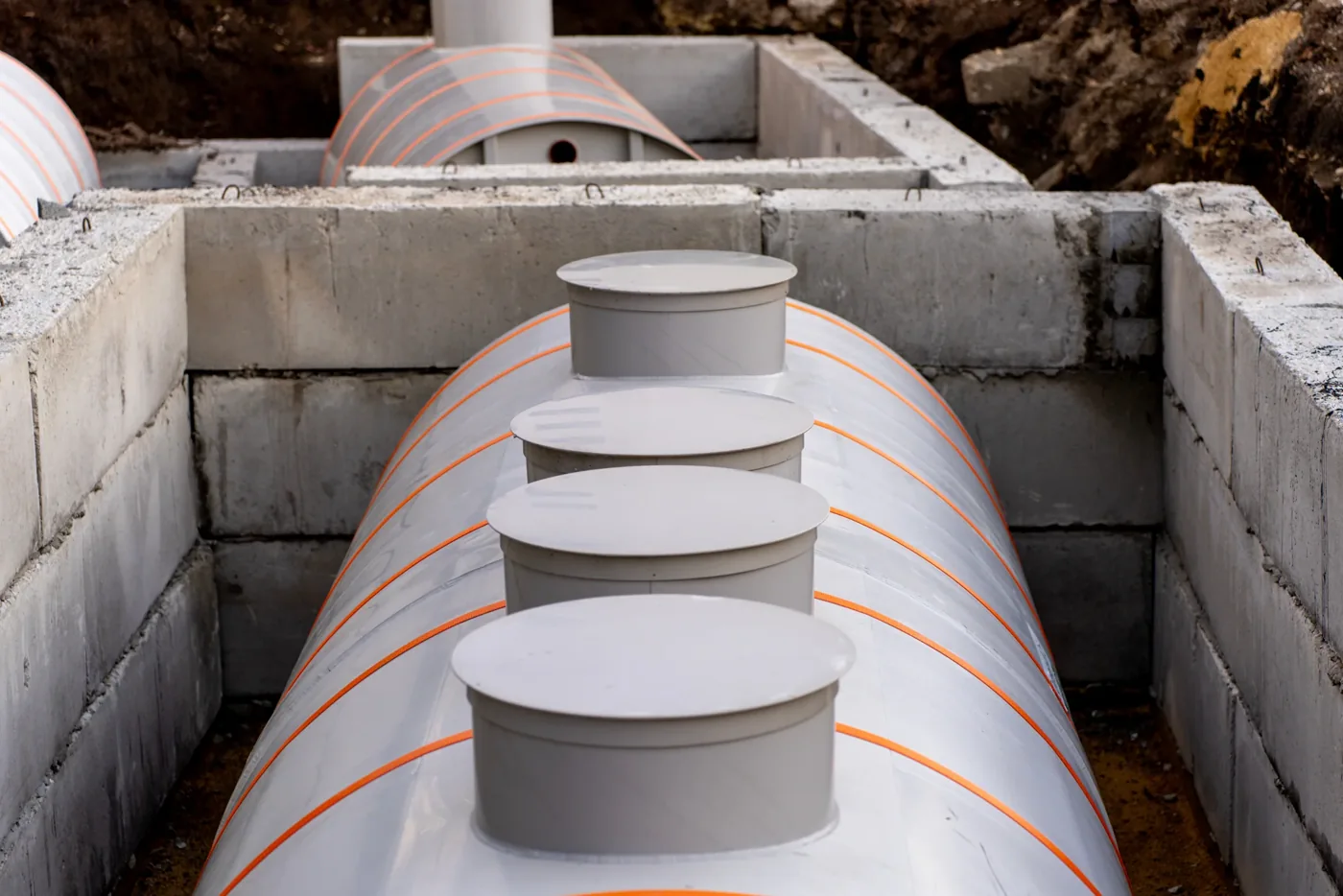
The tank itself is only one part of the installation. Underground inlet pipes, inspection chambers, outlet connections and the drainage field may occupy land close to the proposed extension.
Building over or too close to those components can create problems with access, structural loads and future maintenance. The drainage field also needs suitable ground conditions to function.
Before fixing the building footprint, identify the available drainage plans and compare them with the actual site layout. Older properties may have incomplete records, and visible access covers do not necessarily reveal every buried connection.
Where the extension would encroach on drainage infrastructure, the design may need to change or the drainage arrangement may need specialist reassessment.
The drainage fields guide provides additional context on this buried part of the installation.
Could the extension change the discharge’s regulatory status?
In England, the Environment Agency distinguishes existing sewage discharges from new discharges, including certain significant changes to an established arrangement.
According to GOV.UK guidance on new discharges, changes made since 2 October 2023 can bring a discharge into the new-discharge category. These include changing its receiving environment, moving the discharge point more than 10 metres, or increasing the daily discharge above specified thresholds.
Those volume thresholds are more than 2,000 litres a day for discharges to ground and more than 5,000 litres a day for discharges to surface water.
These figures determine whether certain changes count as a new discharge; they are not recommended tank capacities. Even a smaller increase can require a fresh capacity assessment. In England, a discharge of more than 2,000 litres per day to ground cannot operate under the general binding rules. Connection to a public foul sewer is required where reasonable, or an environmental permit is needed where connection is not reasonable. The 5,000-litre surface-water threshold must not be interpreted as permission for a conventional septic tank to discharge directly into a watercourse.
A conventional septic tank normally discharges to ground through a drainage field. An existing septic tank discharging directly to surface water presents a separate compliance issue that should not be treated as acceptable merely because it predates the extension.
What can an inspection establish before building work?
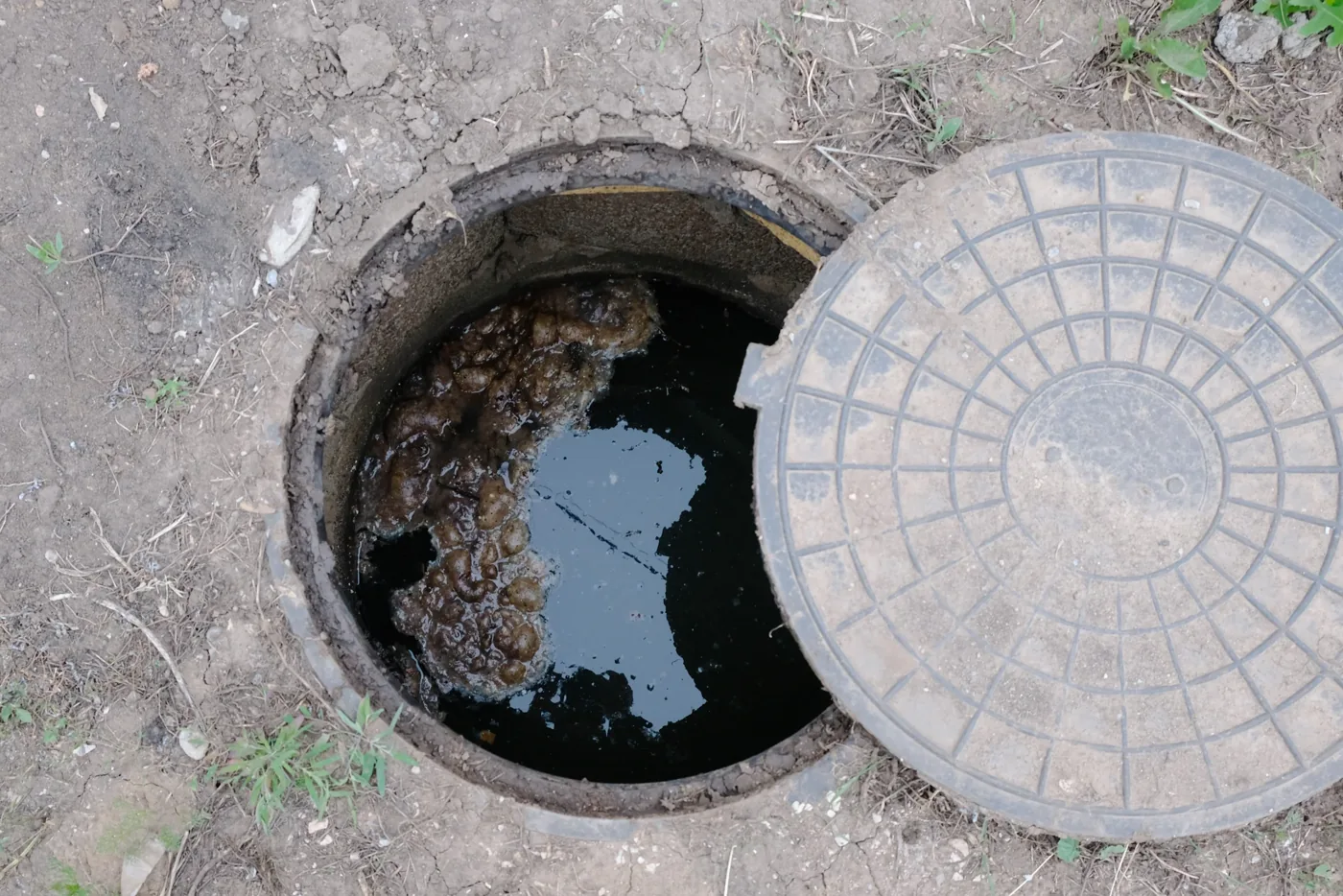
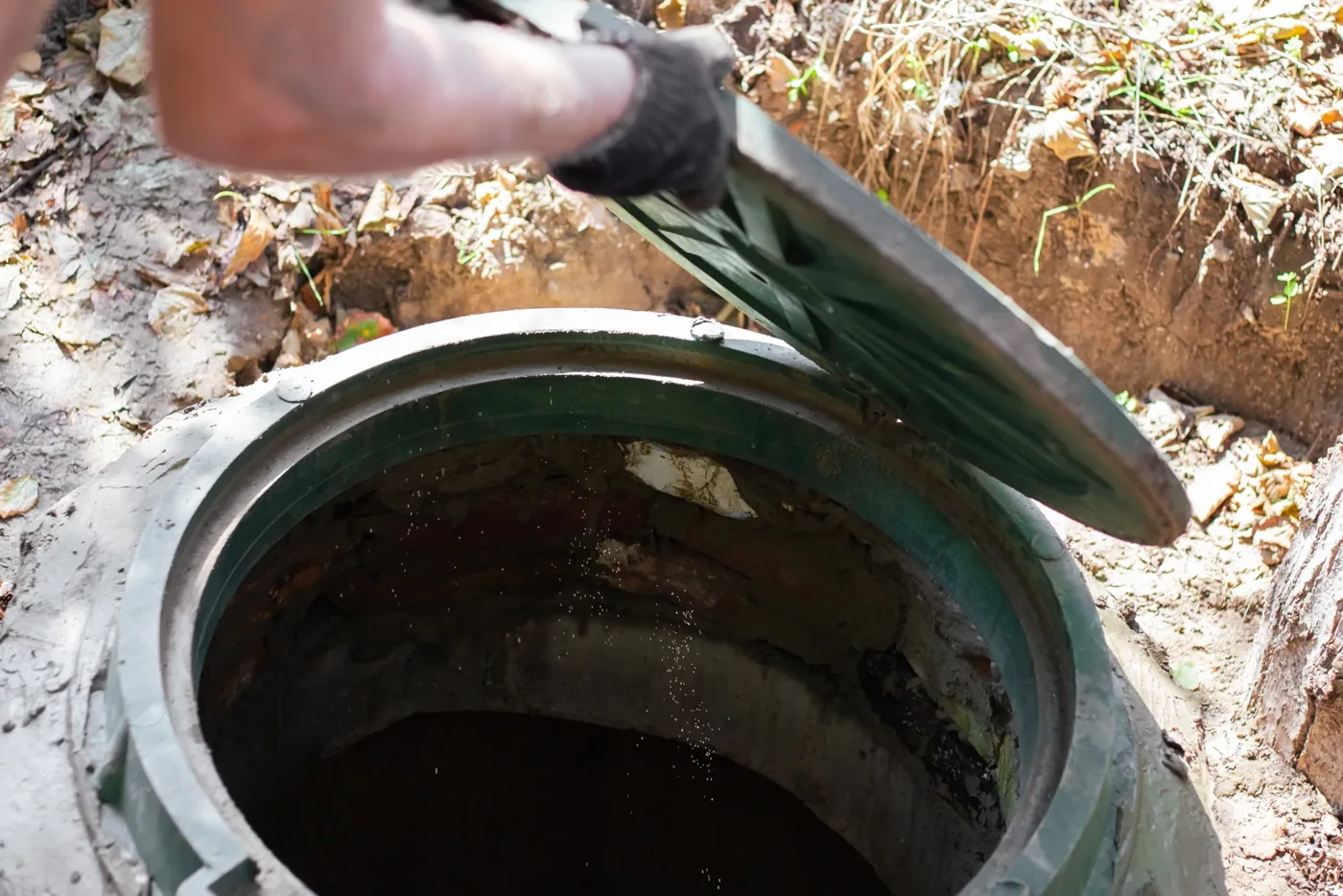
A septic tank inspection can provide information about accessible parts of the existing installation. Depending on access and condition, relevant findings may include:
- The apparent tank type and arrangement of accessible compartments.
- Visible condition of accessible inlet and outlet components.
- Sludge accumulation and available maintenance records.
- Signs of unusually high liquid levels or restricted discharge.
- Accessible chamber locations and obvious maintenance-access limitations.
These observations help establish the current condition, but an inspection through existing access points cannot prove the capacity or condition of an entire buried drainage field.
Where records are missing, additional investigation or specialist design assessment may be necessary to establish whether the system can accommodate the proposed development.
What should be resolved before construction?
Before building work, establish the tank and drainage locations, existing use and proposed occupancy. If sewage demand increases, recalculate the maximum daily discharge and check whether the existing system has sufficient capacity.
Any necessary changes to the discharge arrangement should be considered alongside building regulations and planning requirements, rather than after construction restricts access to the system.
An early assessment can identify whether the current installation remains suitable, requires maintenance or needs a more substantial drainage review. It also helps avoid designing an extension around an assumption that the original septic system will automatically cope with the enlarged property.