Septic Tank Emptying Cumbria

Septic tank, cesspool and treatment plant emptying in Cumbria for homes, farms, holiday lets and businesses, from valley villages to farms at the end of a long track.

HomeSeptic Tank Emptying Cumbria

Septic Tank Emptying Cumbria enquiry

Septic tank emptying across Cumbria

If your home, farm or holiday let in Cumbria has a septic tank, it will need emptying periodically to remove the solids that settle at the bottom. Without regular desludging, sludge can build up and pass into the drainage field, affecting how the system works. The same applies to sewage treatment plants, while cesspools need emptying as they fill. Neither Cumberland Council nor Westmorland and Furness Council provides septic tank emptying, so owners need to arrange a private contractor. Find out more about the work involved in septic tank desludging.

Small stream winding through rough grassland and trees in evening sunlight

Homes, farms and holiday lets

Septic tank, cesspool and treatment plant emptying for domestic, agricultural and commercial properties.

Rural tanker access

Tracks, gateways, gradients and distance from the tank are important when assessing access.

Cumbria-specific guidance

Local council advice on emptying intervals, flooded tanks and private drainage.

How often should a septic tank be emptied in Cumbria?

Cumberland Council advises emptying septic tanks every 12 months. Depending on the tank’s size and use, the interval may be extended, but its guidance says not beyond two years. Westmorland and Furness Council recommends annual emptying to prevent sludge building up. The Environment Agency also advises removing sludge at least annually or in accordance with the manufacturer’s instructions.

A family home, a holiday let with changing occupancy and a farm property may place different demands on their drainage systems. Tank capacity, use and the manufacturer’s instructions all matter when deciding when desludging is needed. Our guide to septic tank emptying intervals explains the main considerations.

Cesspool and sewage treatment plant emptying

A cesspool, also called a cesspit, is different from a septic tank. It stores wastewater rather than treating it and discharging liquid through a drainage field. The contents therefore need collecting as the tank fills. Cumberland Council states that cesspools must be emptied by a competent contractor.

Package sewage treatment plants also accumulate sludge and need periodic removal. The emptying requirements depend on the plant and its manufacturer’s instructions. Properties with a treatment plant can find further information on our sewage treatment plant emptying page.

Septic tank emptying after flooding

Flooding can affect septic tanks and drainage fields, particularly where the surrounding ground remains saturated. Westmorland and Furness Council advises reducing wastewater use while flooding continues. It also explains that a flooded tank may need more frequent emptying, although removing its contents in waterlogged conditions can draw mud or silt inside or, in extreme circumstances, cause the tank to lift.

If the tank or drainage field has been flooded, describe the ground conditions to the drainage contractor before arranging emptying. Signs of a system struggling include strong odours around the tank, unusually high sludge levels, wastewater overflowing and sewage backing up through toilets or sinks.

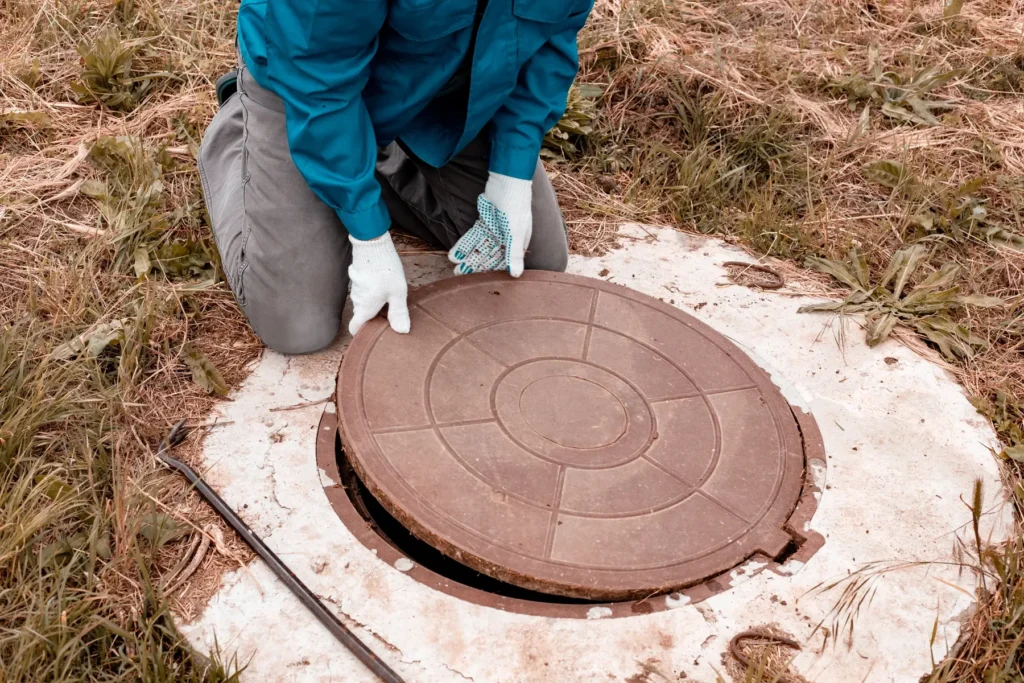
Person in gloves lifting a round access cover set in dry grass

Arrange septic tank emptying in Cumbria

Tell us whether you have a septic tank, cesspool or treatment plant, where it is located and how a tanker can access the property.

Getting a tanker to rural properties and fell farms

Access is an important consideration for septic tank emptying across rural Cumbria. A tank may be behind a farmhouse, below a holiday cottage or some distance from the nearest suitable vehicle standing area. Narrow lanes, cattle grids, steep tracks, gateways and bridges can all affect whether a tanker can reach the property.

Useful details include the tank’s location, the distance from the nearest vehicle access, the condition of the track and any restrictions along the approach. A long hose run may be needed where the tanker cannot park near the tank. The position of buried tanks and their covers also matters when considering vehicle access.

On working farms, identify the domestic sewage tank separately from slurry stores, yard drainage and other agricultural waste systems. Different waste streams have different collection requirements.

Private water supplies and drainage fields

Some rural properties use drinking water from springs, wells or boreholes. Where a septic tank drainage field is close to a private water supply, its location needs particular attention. Environment Agency guidance states that a groundwater source protection zone 1 can include land within 50 metres of a private water supply used for human consumption.

A sewage discharge to ground within source protection zone 1 generally requires an Environment Agency permit rather than relying on the general binding rules, with an exception for SPZ1c. The position of neighbouring private water supplies is therefore relevant when assessing an existing drainage arrangement or considering alterations.

Septic tanks around Windermere and protected catchments

Private drainage also receives attention around Cumbria’s lakes and rivers. Environment Agency modelling identifies septic tanks and private sewage treatment works among the sources of phosphorus entering Windermere, alongside other sources including storm overflows and runoff.

Nutrient neutrality measures affect development in designated catchments associated with the River Eden, River Derwent and Bassenthwaite Lake, River Kent and Esthwaite Water. The Enhance Your Tank scheme, involving Cumbria’s councils and national park authorities, has offered opportunities for eligible owners to express interest in replacing older private drainage systems where funding is available. These replacements can reduce phosphorus entering watercourses.

The Lake District National Park Authority also provides information about independent non-mains drainage improvement schemes, including the United Utilities Windermere scheme. Its Local Development Order provides a route for certain qualifying replacements serving up to three houses without a separate planning application. Any new package treatment plant will still require appropriate maintenance and desludging.

Arranging septic tank emptying in Cumbria

Before arranging collection, it helps to know whether the property has a septic tank, cesspool or package treatment plant. The approximate tank capacity, previous emptying date, access arrangements and any current drainage problems are also useful. If the property has been flooded, mention this before collection is considered.

Looking for emptying services elsewhere? See our service areas, including Northern Ireland septic tank emptying.

Septic Tank Emptying Cumbria: common questions

Does the council empty septic tanks in Cumbria?

No. Cumberland Council and Westmorland and Furness Council both say they do not provide septic tank emptying, so owners arrange a private contractor. Both recommend annual emptying, although Cumberland Council allows longer intervals for some tanks, up to two years.

Should I have my septic tank emptied after a flood?

Not necessarily straight away. Westmorland and Furness Council says flooded tanks may need more frequent emptying, but removing the contents while the ground is waterlogged can draw in silt or cause the tank to lift. Ask a drainage contractor to assess the conditions before emptying.

Can I get my septic tank replaced under the Enhance Your Tank scheme?

The scheme allows owners in relevant Cumbria catchments to express interest in replacing eligible private drainage systems. Funding and selection depend on the partnership's assessment. Routine septic tank emptying remains a separate service.

My drainage field is near a spring we drink from. Does that matter?

Yes. Environment Agency guidance says an area within 50 metres of a private drinking water supply can fall within groundwater source protection zone 1. Discharges to ground in this zone generally require a permit, except in SPZ1c. The position of your drainage field and nearby supplies matters.

Can a tanker reach a farm at the end of a fell track?

It depends on the track, gradients, gates, bridges and available vehicle standing area. The distance between the tanker and tank also affects the hose run. Provide these access details when enquiring so the collection requirements can be assessed.

Septic Emptying

Services

Request a quote

Menu

Get a quote