Septic Tank Emptying Aberdeenshire

Septic tank emptying in Aberdeenshire involves removing accumulated sludge from private drainage systems serving homes, farms and commercial properties. Regular de-sludging, suitable tanker access and maintenance of the drainage field all matter. Scottish systems are also subject to SEPA authorisation.

HomeSeptic Tank Emptying Aberdeenshire

Septic Tank Emptying Aberdeenshire quote

Septic tank emptying in Aberdeenshire

Septic tank emptying in Aberdeenshire is needed at rural homes, farms, cottages, holiday accommodation and commercial properties that are not connected to mains drainage. Emptying removes the sludge and accumulated waste from a septic tank before solids build up and affect the outlet or soakaway. Properties with package sewage treatment plants also need sludge removal alongside their normal servicing.

Aberdeenshire Council advises that septic tanks should normally be de-sludged every twelve months, although the interval may be longer depending on tank size and usage. Access also needs consideration, particularly where tanks are reached by farm tracks, narrow lanes or across uneven ground. Before arranging a collection, it helps to know the tank location, the type of system and where a tanker could stand.

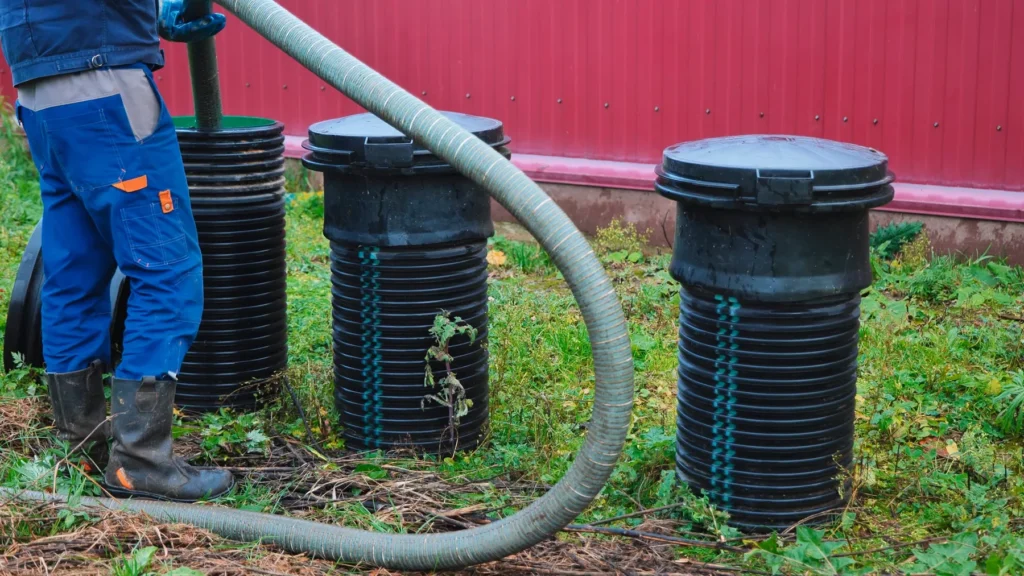
Operative holding a suction hose beside three black tank access risers standing in rough grass.

Scottish rules apply

Private sewage discharges in Aberdeenshire fall under SEPA authorisation. The English general binding rules do not apply.

Regular de-sludging

Aberdeenshire Council normally recommends emptying every twelve months. Tank size, usage and SEPA maintenance guidance also need consideration.

Rural tanker access

The standing position, hose distance, vertical lift and ground conditions affect how a tanker can reach the tank.

What happens when a septic tank is emptied?

A septic tank receives wastewater from toilets, sinks, baths and other household drainage. Solids settle inside the tank while liquid effluent passes through the outlet, normally into a soakaway or drainage field. Over time, sludge accumulates at the bottom and must be removed.

During emptying, a tanker uses a suction hose to remove the accumulated contents. The operator needs access to the tank cover and a suitable position for the vehicle. The amount of waste removed depends on the tank and the work required. Emptying deals with accumulated sludge, but it does not repair damaged pipework, a blocked drainage field or a faulty treatment plant.

Before a collection, useful details include:

  • Whether the property has a septic tank, package treatment plant or sealed cesspit.
  • Where the tank is located and whether its access cover can be reached.
  • The approximate distance between the tank and a suitable tanker standing position.
  • Whether access involves narrow gates, farm tracks, soft ground or steep gradients.
  • When the tank was last emptied and whether there are any current drainage problems.

Older properties sometimes have tanks in gardens or fields away from the main buildings. Where the cover is difficult to locate, identifying it before collection helps establish how the work can be carried out.

How often should a septic tank be emptied?

Aberdeenshire Council’s septic tank guidance recommends de-sludging normally every twelve months. It explains that the interval may be extended depending on the tank’s size and usage, but not normally beyond two years. SEPA’s maintenance guidance advises owners to empty or de-sludge private sewage treatment systems regularly or at least once a year.

The amount of wastewater entering the system affects how quickly sludge accumulates. A farmhouse occupied throughout the year, a holiday cottage with changing occupancy and a steading conversion serving several households may all have different demands on their tanks.

Heavy use, the capacity of the tank and the maintenance history should be considered when deciding on an emptying interval. Leaving accumulated sludge in the tank can allow solids to reach the outlet and affect the drainage field. The separate guide to how often a septic tank should be emptied explains the factors involved.

Access for septic tank emptying in rural Aberdeenshire

Access is an important part of septic tank emptying around Aberdeenshire, particularly at farms and properties set back from public roads. A tanker needs a suitable place to stand and a clear route for the suction hose between the vehicle and the tank.

Scottish building standards guidance for private wastewater treatment systems specifies a working area within 25 metres of the tank, where the vehicle position is no more than four metres above the tank invert level. The area should also support a vehicle axle load of 14 tonnes. These are design guidance figures rather than a guarantee that every existing installation can be emptied from that position.

Points worth checking before collection include:

  • Farm tracks that become soft or difficult to use after prolonged rain.
  • Single track approaches with restricted turning space.
  • Narrow gateways, overhanging branches and other vehicle obstructions.
  • Tanks below the available standing area, where the vertical lift affects suction.
  • Tank covers beneath turf, gravel or later landscaping.
  • Long hose routes across gardens, yards or uneven ground.

These issues can arise at properties around Inverurie, Ellon, Huntly, Banchory, Peterhead, Fraserburgh and Stonehaven, as well as more isolated rural locations. Access should be assessed according to the individual property rather than its postcode.

The Scottish building standards technical handbook explains the design guidance for tanker access and private wastewater treatment systems.

Soakaways, drainage fields and ground conditions

Septic tanks rely on more than the tank itself. In many installations, treated effluent leaves the tank through an outlet pipe and enters a soakaway or drainage field. The condition of that drainage field is important to how the complete system performs.

Ground conditions vary across Aberdeenshire. A property on free draining ground may have different drainage characteristics from one with clay, peat or shallow soil over rock. The actual soil conditions and drainage arrangements at the property matter more than assumptions based on the surrounding area.

SEPA advises owners to check that soakaways are draining properly without sewage pooling or blockages. Aberdeenshire Council also advises against digging over, driving across or covering a drainage field with a hard surface.

If wastewater is appearing at the surface, drains are backing up or the ground around the soakaway remains unusually wet, the problem may extend beyond accumulated sludge. Emptying the tank alone will not necessarily resolve a drainage field fault.

The guides to soakaway problems and septic tank drainage fields explain these parts of the system and the signs that need further investigation.

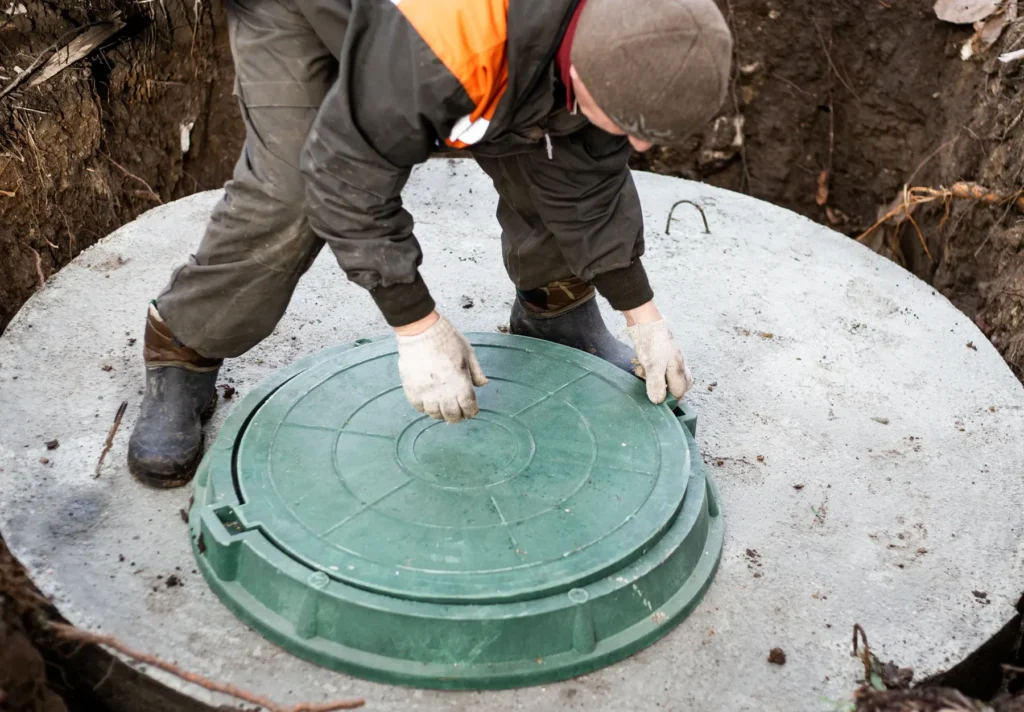
Worker in gloves lowering a green circular lid onto a concrete tank top in an open excavation.

Arrange septic tank emptying in Aberdeenshire

Tell us the property location, whether you have a septic tank, cesspit or treatment plant, and where a tanker could stand. Include the last emptying date if known and any access or drainage problems so we can discuss the collection requirements.

Farm septic tanks and shared drainage systems

Farms and converted steadings can have drainage arrangements that differ from those at an individual house. One septic tank may serve a farmhouse, neighbouring cottages, converted accommodation or staff welfare facilities. The number of people using the system and the wastewater entering it need to be considered when planning maintenance.

At working farms, access can also be affected by livestock gates, agricultural vehicles, field conditions and the position of the tank relative to the farmyard. Knowing which access route a tanker can use helps when arranging emptying.

Where several properties share a private sewage treatment system, SEPA states that responsibility for maintaining it is shared between the connected property owners. Maintenance records and an understanding of the shared arrangement are particularly useful where occupancy differs between buildings.

The farm septic tank emptying guide covers the additional considerations for agricultural premises and shared farm drainage systems.

Sewage treatment plant emptying and servicing

Not every private drainage system in Aberdeenshire is a conventional septic tank. Package sewage treatment plants use additional treatment processes and may include pumps, aeration equipment, controls and other components that require maintenance.

These systems still accumulate sludge, but emptying and servicing are separate parts of their maintenance. Sludge removal deals with the material collected in the plant, while servicing involves checking that its treatment equipment and operating components are working as intended.

SEPA advises that package treatment plants should be maintained according to the manufacturer’s instructions. The plant make and model are useful when determining the work required, as different designs have different servicing arrangements.

A sealed cesspit or cesspool works differently again. It stores wastewater without a normal discharge to a drainage field, so the stored contents require collection. The type and size of the installation influence the collection requirements.

For further information, see sewage treatment plant servicing.

Scottish rules for septic tanks in Aberdeenshire

Septic tanks and private sewage treatment systems in Aberdeenshire fall under Scottish environmental regulation. The general binding rules used for small sewage discharges in England are not the applicable regime here.

Where a private sewage treatment system discharges effluent to land or water, an authorisation is required from the Scottish Environment Protection Agency, known as SEPA. For many domestic systems, this takes the form of a registration.

SEPA provides registration arrangements for discharges from up to ten domestic properties, or combinations of domestic and non-domestic properties serving a population equivalent of up to fifty. In these calculations, one domestic property counts as five population equivalent. A permit is required instead for certain discharges, including those to phosphate sensitive catchments and freshwater lochs.

New sewage discharges must connect to the public sewer where possible. Where a private system is used, the relevant Scottish authorisation and maintenance requirements apply.

The official SEPA guidance on septic tanks and private sewage treatment systems explains registration, permits and how to check an existing discharge authorisation.

Checking the tank when buying or selling a rural property

A septic tank or treatment plant is part of the drainage arrangements that should be understood when buying or selling a property without mains drainage. Useful information includes the tank location, the route to the soakaway or discharge point, previous emptying records and any available treatment plant instructions.

The SEPA registration record is also relevant. Owners can check whether an existing discharge is registered and whether the recorded details correspond with the installation. SEPA states that changing the name or address of a property already specified in a registration does not itself require a new registration.

Where there is uncertainty about the tank’s condition, drainage arrangement or maintenance history, a septic tank survey can help establish what is installed and identify matters requiring further attention.

Arranging septic tank emptying in Aberdeenshire

For a septic tank, cesspit or sewage treatment plant collection, the main details needed are the property location, the type of system, its approximate capacity if known and the access available for a tanker.

It is also useful to mention any current problems, such as slow drainage, a high liquid level, an inaccessible cover or an uncertain emptying history. If the system serves a farm, business or several buildings, describe how it is used so the collection requirements can be considered.

Providing these details helps establish the work needed at the property, including whether the request concerns routine sludge removal, a sealed tank collection or a treatment plant requiring separate servicing.

Septic Tank Emptying Aberdeenshire: common questions

Do the general binding rules apply in Aberdeenshire?

No. The general binding rules used for small sewage discharges in England do not apply in Scotland. Private sewage discharges in Aberdeenshire are regulated by SEPA and require the appropriate Scottish authorisation, usually a registration for a small domestic system.

Does my septic tank need to be registered with SEPA?

A septic tank discharging effluent to land or water needs the appropriate SEPA authorisation. Registration is available for discharges from up to ten domestic properties, or a combination of domestic and non-domestic properties serving up to fifty population equivalent. A permit is required for certain discharges, including those to phosphate sensitive catchments and freshwater lochs. SEPA can check whether an existing discharge is registered.

How often should a septic tank be emptied in Aberdeenshire?

Aberdeenshire Council advises de-sludging normally every twelve months. It explains that the interval may be longer depending on tank size and usage, but not normally beyond two years. SEPA's maintenance guidance advises regular emptying or de-sludging at least once a year.

How close does the tanker need to get to the tank?

Scottish building standards guidance specifies a tanker working area within 25 metres of the tank, where the vehicle position is no more than four metres above the tank invert level. The ground should support a 14 tonne axle load. These are design guidance figures. Existing installations need their actual access, hose route and ground conditions assessed.

What happens to the registration when a property is sold?

The useful first step is to check the existing SEPA discharge registration and confirm the recorded details correspond with the property and system. SEPA states that changing the name or address of a property specified in a registration does not itself require a new registration.

Can a septic tanker reach a tank across a farm field?

That depends on the ground conditions, available vehicle access, hose distance and difference in height between the tanker and tank. Soft ground, restricted gateways and a long route to the tank cover should be identified before arranging collection.

Septic Emptying

Services

Request a quote

Menu

Get a quote