Septic Tank Survey

A septic tank survey for a property sale or purchase identifies the drainage system, assesses its condition and examines the discharge arrangements. It provides evidence for a buyer or seller beyond a routine maintenance inspection.

HomeSeptic Tank Survey

Septic Tank Survey quote

What a septic tank survey is for

A septic tank survey checks the private drainage system at a property being bought or sold. It establishes what is installed, what condition it is in, where the wastewater goes and what evidence is available about the discharge arrangements. The findings help buyers understand the system they are taking responsibility for and give sellers a clearer picture of any issues that need addressing.

A general building survey may not include a detailed assessment of private drainage. A separate septic tank survey can examine the tank, associated pipework, drainage field and relevant maintenance or authorisation records. The precise checks depend on the system, access to its components and the scope agreed for the survey.

This differs from a routine septic tank inspection, which concentrates on the condition and maintenance needs of an existing system. A survey for a property transaction should also identify uncertainties, supporting evidence and defects that could affect the purchase.

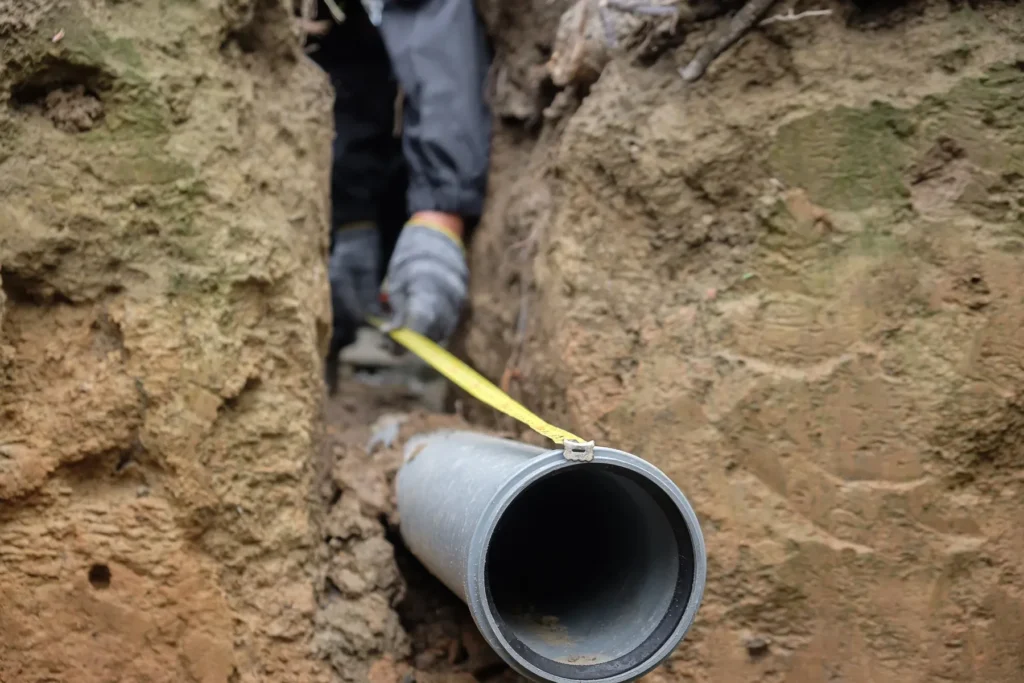
Gloved hands holding a tape measure against the open end of a grey drainage pipe in an excavated trench.

Evidence for a property purchase

The report identifies the drainage system, records its observed condition and highlights defects or uncertainties relevant to the transaction.

Drainage field assessment

A sound tank does not necessarily mean the drainage field is working correctly. The survey should examine the available evidence.

Discharge arrangements and records

The survey considers the discharge destination, available authorisation evidence and the requirements relevant to the property's location.

Finding the system and establishing what it is

The first task is to identify the drainage arrangement and locate its main components. Properties without mains drainage may use a septic tank, package sewage treatment plant or sealed cesspit. These systems operate differently, particularly when it comes to discharging treated wastewater.

Inspection covers can become concealed by gardens, gravel, paving or alterations to the property. Drawings and previous drainage records may help locate the installation, but their accuracy needs checking against what is found on site.

A survey should establish and record the following information where it can be verified:

  • The type of tank or treatment system and its construction
  • Its approximate capacity and the number of chambers
  • The location and accessibility of inspection covers
  • The inlet and outlet arrangements and visible pipework
  • The route and destination of the discharge
  • Any pumping equipment or associated electrical controls

Some systems include pump chambers that transfer sewage or treated effluent between parts of the installation. These should be identified because their operation and maintenance requirements form part of the overall condition assessment.

What is checked inside the tank

Internal checks depend on the tank design, access arrangements and whether emptying forms part of the survey. A full tank can prevent a clear view of its structure and internal fittings. Where necessary and appropriate, emptying may be arranged to allow a more detailed examination.

The assessment may include:

  • Visible walls, joints and accessible structural components for cracking, displacement or deterioration
  • Signs of groundwater entering the tank or wastewater escaping
  • The condition of outlet baffles and dip pipes
  • Any fitted outlet effluent filter and evidence of blockage or damage
  • Inlet and outlet connections, including signs of backing up or surcharging
  • Inspection covers, access points and visible defects

Changes in liquid level can indicate a problem, but they do not establish the cause on their own. Groundwater conditions, incoming flows and the tank construction all need consideration. Where leakage is suspected, the report should distinguish the observed evidence from any further testing required.

Assessing the drainage field

The drainage field is an important part of a septic tank installation. Liquid effluent leaving the tank normally passes into a network of underground distribution pipes, allowing further treatment as it moves through suitable ground. A tank may appear sound while the drainage field has problems accepting effluent.

The survey should establish where the discharge goes and identify the drainage field where possible. Relevant observations include saturated ground, standing water, effluent appearing at the surface, signs of previous excavation and unusual wet areas around the suspected drainage route.

These observations help assess the installation, but they are not conclusive tests of drainage field performance. Further investigation may involve examining distribution points, observing how the system responds to flow or assessing the ground conditions. Formal percolation testing is a separate procedure and should not be assumed to form part of every property survey.

The report should explain what was inspected, what evidence was found and which parts of the field could not be assessed. Our information on drainage fields explains their construction and function, while soakaway problems covers common signs of drainage failure. A drainage field for treated sewage effluent is not the same as a surface water soakaway.

Camera inspection of drainage pipework

CCTV drain inspection can help establish the condition of accessible underground pipework between the property and the treatment system. It may reveal displaced joints, cracking, root intrusion, obstructions, standing water or unexpected connections.

Camera inspection is particularly useful where pipe routes are uncertain or where there is evidence of recurring blockages. The footage can support a written description of defects and their locations. Where a formal drain condition coding method is used, the report should identify it.

A camera survey does not automatically establish pipe gradients or prove that a drainage field is working. Some sections may also be inaccessible. The report should identify which runs were inspected and explain any limitations rather than treating the recorded footage as an assessment of the entire installation.

Checking the discharge arrangements and authorisation

Part of a property purchase survey is establishing whether the discharge arrangement is appropriate and what authorisation or supporting records are available. The relevant rules depend on the location of the property, the type of installation and where the effluent discharges.

England

In England, qualifying small sewage discharges may operate under the general binding rules without an environmental permit. A septic tank must not discharge directly into a watercourse. Where an existing septic tank does so, the system must be brought into compliance by connecting to a public sewer, installing a suitable treatment plant or providing a compliant drainage field, as applicable.

Government guidance advises buyers and sellers to agree responsibility for necessary corrective work as a condition of sale. Our septic tank general binding rules page explains the English requirements in more detail.

Scotland

In Scotland, discharges from septic tanks and package treatment plants require authorisation from the Scottish Environment Protection Agency, usually through registration. A survey should identify the discharge arrangement and consider any available SEPA registration or other authorisation records.

Wales and Northern Ireland

In Wales, Natural Resources Wales administers the registration and permitting arrangements for private sewage systems. Many qualifying small discharges require registration rather than an individual permit. In Northern Ireland, discharge consent is administered by the Department of Agriculture, Environment and Rural Affairs. The survey should record the evidence available for the relevant system and jurisdiction.

Useful official guidance includes GOV.UK general binding rules for discharges to ground, GOV.UK general binding rules for discharges to surface water and SEPA guidance on private sewage treatment systems.

Detached red brick house with a lawn, a hedge and open fields behind it.

Arrange a septic tank survey

Buying or selling a property with a septic tank or private sewage system? Tell us what you know about the installation and any existing drainage records so we can discuss the survey requirements.

What the survey report should contain

The report should give a prospective buyer a clear account of the installation, its observed condition and any unresolved questions. It should distinguish confirmed defects from suspected problems and identify where further investigation is needed.

A useful report will normally address:

  • The type, location and identifiable components of the system
  • Its approximate capacity, where this can be established
  • Photographs and descriptions of accessible components
  • The drainage field or other discharge arrangement
  • Results of internal, pipework and drainage assessments actually completed
  • Any defects, their significance and recommended further action
  • Available maintenance records, manuals and discharge authorisation evidence
  • Areas that could not be accessed or adequately inspected

Findings should be sufficiently detailed to help the buyer understand which issues require maintenance, repair, specialist investigation or possible replacement. Where costs need to be established, the report can identify the work for which a separate quotation is required.

Photographs, site sketches and clear descriptions of component locations are particularly useful when the buyer has not previously operated a private sewage system.

What the seller should be ready to hand over

In England, the general binding rules require the seller to give the new operator written information about an existing sewage discharge. This includes a description of the treatment system, the drainage arrangements, the locations of the main components and discharge point, details of changes made, maintenance information, any available manual and maintenance records.

It is useful to gather these documents before the property is marketed. Previous emptying records, servicing information, installation drawings and correspondence about the drainage system can also help a surveyor establish its history.

Where documents are missing, a physical survey can establish some of the information, but it cannot automatically replace historical maintenance records or demonstrate that an unverified discharge is authorised. The report should make that distinction clear.

How a survey differs from a routine inspection

A routine inspection deals mainly with maintenance and present condition. It may identify damaged fittings, servicing requirements or signs that the system is not operating correctly.

A survey for a sale or purchase brings those observations together with identification of the full installation, discharge arrangements, available authorisation evidence and information relevant to the transaction.

The physical checks may overlap. The main difference is the purpose and scope of the report. A buyer needs to understand the system being acquired, including anything that remains uncertain, rather than receiving only a list of maintenance observations.

What affects the scope of a survey

Not all septic tank surveys include the same investigations. The amount of work depends on the type of system, the available documentation, access to inspection points and the condition of the installation.

Additional work may be needed to locate buried components, arrange tank emptying, inspect underground drains with a camera or investigate a suspected drainage field problem. An initial assessment may identify questions that require more intrusive testing.

Before commissioning a survey, establish whether tank emptying, CCTV inspection, drainage field assessment and a written condition report are included. This makes it easier to compare the work proposed and understand what the finished report will cover.

Questions to ask before commissioning a survey

Ask whether the survey is intended specifically for a property purchase or sale, and which parts of the system will be examined. Confirm whether the surveyor will assess the drainage field, review available discharge records and provide photographs of relevant findings.

It is also worth checking how inaccessible components and uncertain discharge arrangements will be recorded. A useful survey explains what has been established and what remains unknown, allowing the buyer or seller to decide whether further investigation is necessary.

Septic Tank Survey: common questions

What does a septic tank survey include?

A septic tank survey identifies the system, examines accessible components, assesses the discharge arrangements and records its condition. Depending on the agreed scope, it may include tank emptying, CCTV inspection of pipework and drainage field investigations. The written report should explain the findings and any areas that could not be assessed.

Is a septic tank survey the same as a CCTV drain survey?

No. CCTV inspection examines accessible underground pipework for defects such as displaced joints, cracks, roots and obstructions. A septic tank survey also considers the tank or treatment plant, the drainage field, maintenance evidence and discharge arrangements. Camera footage alone cannot establish whether the drainage field is functioning correctly.

Do I need a survey when buying a house with a septic tank?

A separate septic tank survey is worth considering because a general building survey may not examine the private drainage system in detail. It can help establish what is installed, identify visible defects and clarify which maintenance and authorisation records are available. Buyers should check what their existing property survey covers before commissioning additional work.

How is a survey different from a routine inspection?

A routine inspection focuses on maintenance needs and the present condition of the system. A survey for a property transaction also examines the installation and discharge arrangements, reviews available records and documents findings that could affect a buyer's decision. Some checks are shared, but the scope and reporting requirements differ.

Does the tank have to be emptied for the survey?

Not every survey requires emptying. It depends on the tank, its condition and the checks being undertaken. Emptying may be necessary to inspect internal components that cannot be seen while the tank is full. The report should identify any checks that were not completed because access or visibility was restricted.

What affects the cost of a septic tank survey?

The scope of the work is the main consideration. Tank emptying, locating buried components, CCTV drain inspection and further drainage field investigations may affect what is required. Compare the checks included in each proposal and confirm whether a written report, photographs and recommendations are provided.

Septic Emptying

Services

Request a quote

Menu

Get a quote